


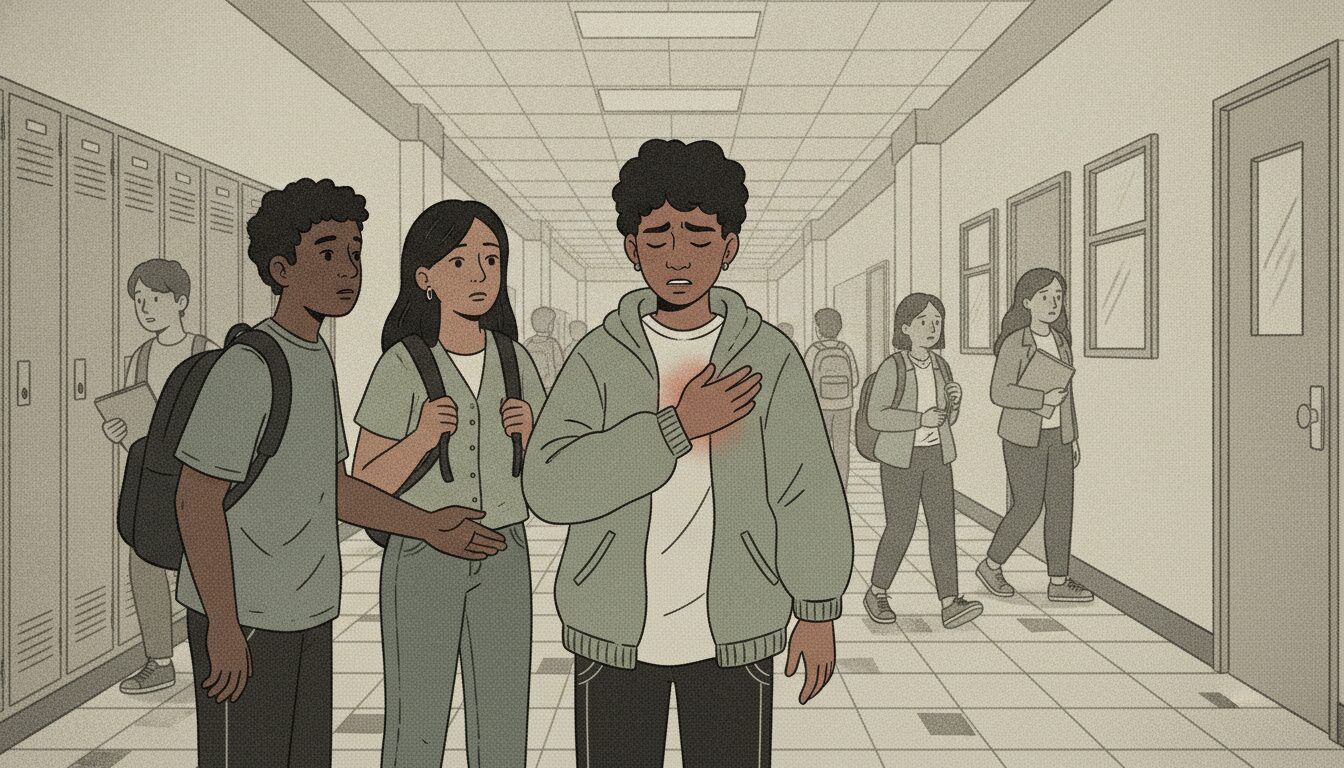
A panic attack can feel like your heart is slamming against your ribs for no clear reason, like suddenly gasping for air, or being gripped by a wave of dread. It’s understandable in those moments to think something is seriously wrong.
Panic attacks, while terrifying in the moment, are not dangerous. And there are concrete, learnable steps that can shorten and soften them.
First, Learn to Spot One
Panic attacks typically strike suddenly, sometimes with no obvious trigger, and peak within about ten minutes before gradually fading. Common signs include:
- A racing or pounding heart
- Shortness of breath or a feeling of choking
- Chest tightness or pain
- Trembling, sweating, or chills
- Dizziness or lightheadedness
- A sense of unreality or detachment from your body
- An overwhelming fear of losing control, or that something catastrophic is happening
Because these symptoms can mimic a heart attack, it’s reasonable to get checked out by a doctor the first time this happens. But once you know it’s panic, recognizing the pattern early is half the battle — the sooner you name what’s happening, the sooner you can respond to it rather than be ruled by it.
What to Do in the Moment
1. Name it. Simply telling yourself, “This is a panic attack, not an emergency — it will pass,” can interrupt the spiral. Panic feeds off catastrophic thoughts (“I’m dying;” “I’m losing my mind”), and physical sensations like a tight chest can fuel those thoughts right back, creating a loop. Reminding yourself that the sensations are uncomfortable but not dangerous helps break that cycle.
2. Breathe from your belly, not your chest. Shallow, rapid chest breathing is both a symptom and a driver of panic. Place one hand on your chest and one below your ribcage; inhale slowly through your nose so the lower hand rises while the upper hand stays still, then exhale gently through your mouth. This kind of diaphragmatic breathing activates the vagus nerve and helps shift your body out of fight-or-flight mode. Counting slowly on each inhale and exhale — for example, a slow count of five in and five out — can make this easier to sustain.
3. Ground yourself with your senses. The classic “5-4-3-2-1” technique works well because it gives your mind something concrete to do instead of chasing worry. Notice five things you can see, four you can touch, three you can hear, two you can smell, and one you can taste. This pulls your attention out of your head and into your immediate surroundings, which calms the nervous system.
4. Don’t fight the symptoms — coexist with them. Trying to suppress or run from panic symptoms often makes them worse. Instead, acknowledge them: “My heart is racing, my hands are shaky, and that’s uncomfortable, but it isn’t harmful, and it’s already starting to ease.” Riding it out where you are, if it’s safe to do so, teaches your brain that nothing catastrophic actually happens.
5. Release physical tension. Progressive muscle relaxation — tensing one muscle group at a time for a few seconds, then letting it go, working from your feet up to your face — gives your body a physical outlet and can quiet the adrenaline surge behind a panic attack.
6. Check the basics: H.A.L.T. Ask whether you’re hungry, angry, lonely, or tired. These states lower your tolerance for stress and can tip you toward panic, so addressing them can help you recover faster and prevent a repeat episode.
Mood Tracking
Athena Care Nurse Practitioner, Brittany Wood, PMHNP-BC, shares a tip that she uses with her patients: “One of the ideas that I love is mood tracking. With panic and anxiety, you can track when it’s happening, what time of day, etc. I find that’s key tool in following up with medications and effectiveness. Creating awareness helps us identify what’s needed going forward. Because if someone is having a panic attack daily then something like an SSRI may be helpful, whereas if the panic attacks are weekly then we may explore other options.”
Mood and symptom tracking can help because they turn a frightening and seemingly chaotic experience into observable, actionable data. By recording the frequency, intensity, triggers, and physical symptoms of attacks as they happen, a person builds a record that is far more reliable than memory, which tends to be distorted during periods of high anxiety, and this in turn helps both patient and clinician spot patterns and adjust treatment.
Tracking works best as part of a broader evidence-based treatment, such as CBT therapy or medication management, rather than as a standalone fix. It should be introduced thoughtfully and reviewed with a professional.

Helping Someone Else Through It
If you’re with someone having a panic attack, stay calm, stay close, and keep your sentences short and simple. Help them focus on their surroundings — ask them to describe an object near them in detail, or guide them through slow counted breathing together. Reassure them, sincerely, that they’re safe and that it will pass; avoid minimizing what they’re feeling, since dismissiveness (even well-meant) tends to escalate distress rather than ease it.
Looking Ahead
A single panic attack doesn’t necessarily mean anything is “wrong” with you — many people experience one or two in a lifetime and never again. But if attacks are frequent, unpredictable, or causing you to avoid places and situations, that’s a sign to talk with a doctor or therapist. Cognitive behavioral therapy is highly effective and often the first-line treatment, and medication can help in the meantime. The trajectory is genuinely hopeful: with practice, these tools work, and panic loses its grip.
If any of the above resonated with you or someone you love, reach out to Athena Care so we can help. You can contact us by filling out this short form or call/text us at +1 877-641-1155 or email [email protected].
Contact us today
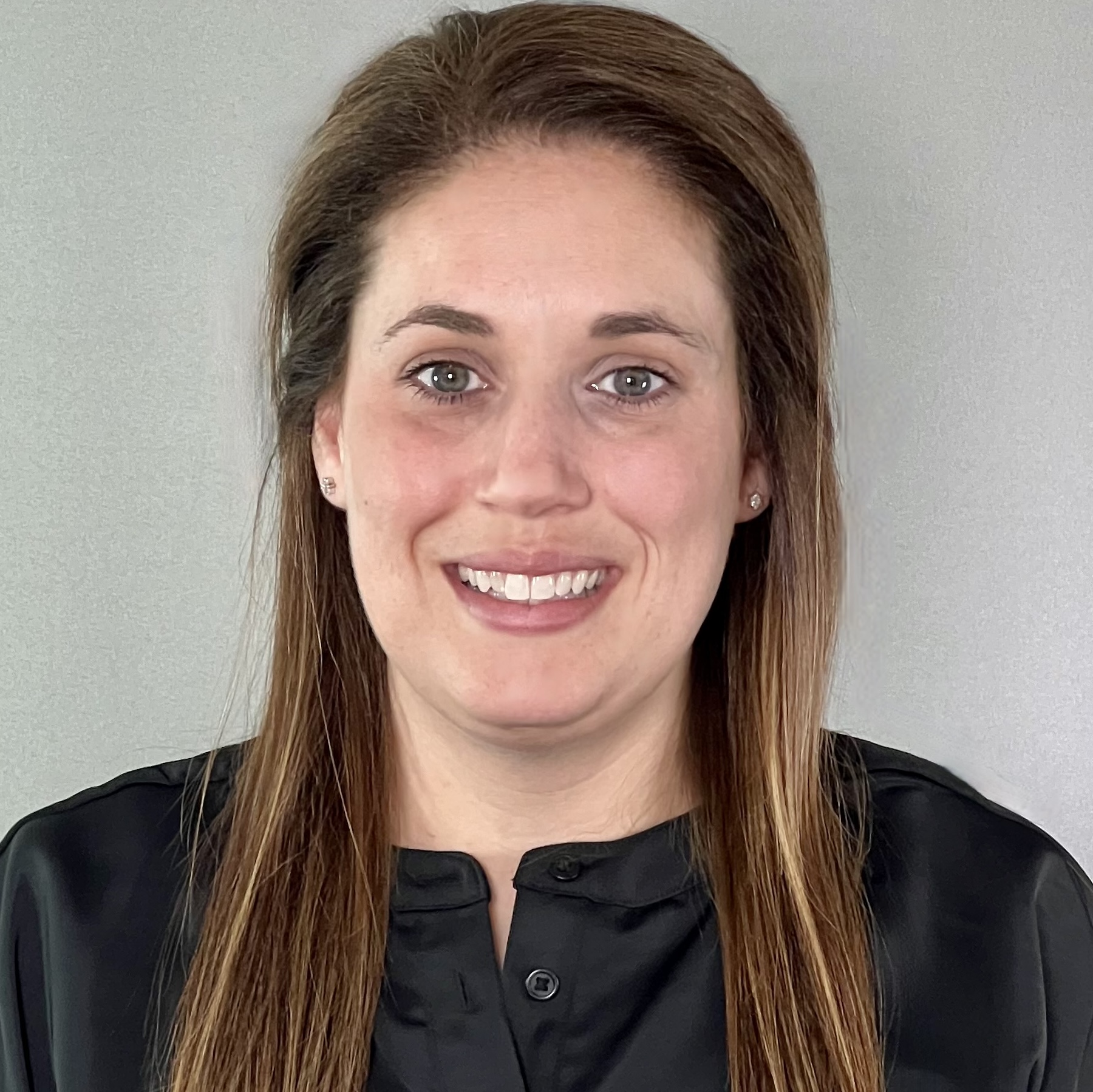
Brittany Wood, PMHNP-BC
Nurse Practitioner
Brittany’s approach to psychiatric care is holistic and patient-centered, focusing on understanding each patient’s unique circumstances and developing personalized treatment plans that promote their overall well-being. She is skilled in diagnosing and treating a wide range of mental health conditions, including anxiety, depression, and ADHD.

Meg Stein, CFP
Editor
Meg is a certified mindfulness instructor and works at Alive and Aware Practice in Durham, NC. She has over ten years of experience as a content creator and marketing consultant, working in mental healthcare and social justice.
Sources:
Mayo Clinic Press. (2024, April 17). You don’t have to live in constant fear of panic attacks. https://mcpress.mayoclinic.org/mental-health/you-dont-have-to-live-in-constant-fear-of-panic-attacks/
Cleveland Clinic. (n.d.). Panic attacks & panic disorder: Causes, symptoms & treatment. Retrieved August 13, 2026, from https://my.clevelandclinic.org/health/diseases/4451-panic-attack-panic-disorder
Cleveland Clinic. (2024, November 25). 13 grounding techniques to help calm anxiety. https://health.clevelandclinic.org/grounding-techniques
Harvard Health Publishing. (2024, May 24). Panic attacks: Recognizing and managing panic attacks and preventing future attacks. Harvard Medical School. https://www.health.harvard.edu/mind-and-mood/panic-attacks-recognizing-and-managing-panic-attacks-and-preventing-future-attacks
WebMD. (2025, March 9). Ways to stop a panic attack. https://www.webmd.com/anxiety-panic/ss/slideshow-ways-to-stop-panic-attack
Tsai, C.-H., Christian, M., & Lai, F. (2023). Enhancing panic disorder treatment with mobile-aided case management: An exploratory study based on a 3-year cohort analysis. Frontiers in Psychiatry, 14, Article 1203194. https://doi.org/10.3389/fpsyt.2023.1203194
Psychology Tools. (n.d.). Panic – Self-monitoring record. Retrieved August 13, 2026, from https://www.psychologytools.com/resource/panic-self-monitoring-record
This article is for general educational purposes and isn’t a substitute for individualized medical or mental health care. If you’re experiencing frequent or worsening panic attacks, please consult a licensed healthcare provider.