

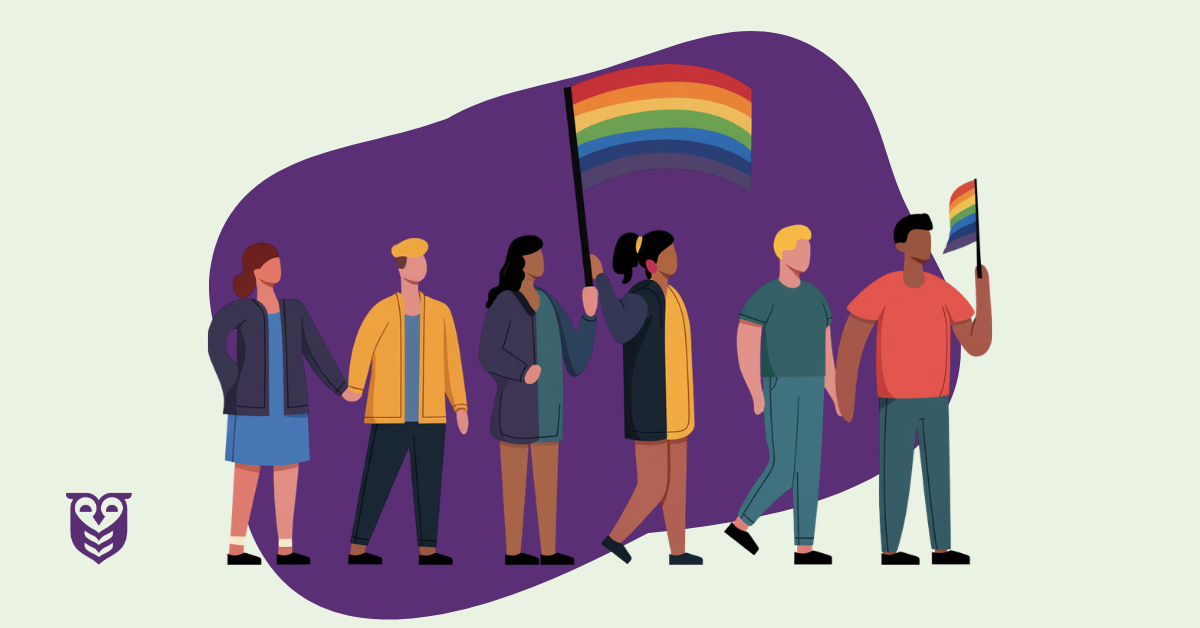
LGBTQ+ affirmative therapy is a specialized approach to counseling that actively affirms and validates diverse sexual orientations and gender identities.
It goes beyond general therapy by ensuring that LGBTQ+ clients feel understood and celebrated, not merely tolerated. This means therapy is conducted in an inclusive, culturally competent way, recognizing that being LGBTQ+ is healthy and normal – the polar opposite of outdated practices like conversion therapy. Why does this matter? Because LGBTQ+ individuals often face unique stressors: discrimination, stigma, and rejection can take a toll on mental health. In fact, LGBTQ+ adults are more than twice as likely to experience a mental health condition than others. A therapist who truly “gets it” can make a world of difference, especially in places like Tennessee where finding affirming care hasn’t always been easy. Below, we’ll explore the key benefits of LGBTQ+ affirmative therapy – and why this approach leads to better outcomes for the community.
Safe and Validating Space
One of the biggest benefits of LGBTQ+-affirmative therapy is the creation of a safe, validating space. With an affirming therapist, you don’t have to educate your provider about your identity or “edit” yourself out of fear of judgment. The therapist comes in already knowledgeable about LGBTQ+ issues and terminology, so you can focus on healing instead of teaching. This can be incredibly freeing – imagine discussing your relationships or coming-out experiences and having the therapist understand immediately, without flinching or making you feel different. Studies note that when queer and trans people don’t have to correct or explain basic parts of their lives to their therapist, they feel far more comfortable opening up.
Affirming therapists also foster genuine understanding and validation, allowing you to share experiences without fear of judgment. The result is often a deep sense of relief: you know this is your space, where your pronouns, identity, and story are respected from the start.Athena Care ensures this kind of welcoming environment for patients. For example, when you call to make an appointment, our staff is attentive to your needs and pronouns so you feel respected from the first phone call. You can even request an LGBTQ+-competent provider up front, and we’ll connect you with a therapist who has experience working with the community. This way, you never have to worry about feeling misunderstood – we strive to meet you with understanding and affirmation at every step.
Empowerment and Identity Exploration
Another key benefit of affirmative therapy is how it empowers clients to explore their identity in a supportive setting. Many LGBTQ+ folks grow up absorbing negative messages about their sexuality or gender. Over time, this can lead to internalized stigma or shame, where you might doubt yourself or feel “wrong” for who you are. Affirmative therapists work with you to unpack and challenge those harmful beliefs, replacing shame with self-acceptance. They acknowledge the “minority stress” you’ve been under – the chronic stress of living in a society that can stigmatize queer and trans identities – and help you develop healthy coping strategies for it. For instance, you might explore fears around coming out, incidents of discrimination, or confusion about your identity, all with a counselor who validates your feelings and celebrates your journey of self-discovery.
Importantly, an affirming therapist will never treat your LGBTQ+ identity as a problem to be solved. Unlike some general therapists who might avoid discussing sexuality or assume it’s the root of your issues, an LGBTQ+-affirming therapist centers your lived experience without judgment. They can help you process trauma related to being shamed or “othered.” As one therapist put it, having an affirming provider means that identity-related shame gets addressed sooner and you can start believing “maybe it’s okay for me to be who I am.” This process is deeply empowering. Clients often report gaining confidence, finding pride in who they are, and feeling free to be authentic in other areas of life after experiencing affirmative therapy. It’s not just about dealing with problems – it’s about celebrating your identity and strengths, and using that as a foundation to thrive.
Better Mental Health Outcomes
LGBTQ+ affirmative therapy doesn’t just feel better – it actually leads to better mental health outcomes. By addressing the unique stresses LGBTQ+ individuals face, this approach can improve symptoms of depression, anxiety, and more. Research consistently shows that when therapy is affirmative, clients have greater improvements in mental health. For example, affirmative therapy integrated with evidence-based techniques (like CBT or mindfulness) has been shown to reduce distress and improve overall well-being for LGBTQIA+ people. One study in Canada found that LGBTQ+ youth who participated in an 8-week affirmative counseling program had significantly lower depression levels and higher coping skills afterward, compared to peers who didn’t get that support. In practical terms, that could mean fewer depressive thoughts, reduced anxiety, and healthier stress management – all because the therapy directly tackled issues of identity and stigma that might otherwise go unaddressed.
Affirmative therapy can also buffer against some of the most serious risks faced by LGBTQ+ folks. By reducing internalized homophobia and providing robust support, it may help lower the risk of self-harm and suicidal ideation that can result from feeling isolated or invalidated. When you feel accepted by your therapist, you’re more likely to stay engaged in treatment and follow through with care, which further improves outcomes. In short, being affirmed saves lives. It’s not just a nice extra in therapy – for many, it’s a key component of healing. Every person deserves a therapist who accepts them completely; affirmative therapy makes that a reality, leading to better mental health and quality of life for LGBTQ+ clients.

Respectful and Inclusive Relationships
In LGBTQ+ affirmative therapy, respect and inclusion are built into the therapeutic relationship. What does this look like? First, your therapist will respect your pronouns, names, and how you identify without hesitation. This might sound simple, but it’s incredibly important – being called by the correct name and pronoun is validating, and unfortunately not always a given in healthcare settings. That kind of respect should be standard, and affirmative therapists make sure it is.
Beyond pronouns, an affirming counselor uses inclusive language and mirrors the terminology you use for yourself and your relationships. You’ll never hear assumptions like “So, do you have a wife?” if that’s not applicable – instead, your therapist might ask, “Do you have a partner?” or use the term “partner” or your partner’s name/gender as you do. If you’re in a same-sex relationship, an open relationship, or have a non-traditional family structure, your therapist will treat it with the same respect and normalcy as any other. No explanation required. This means you can talk freely about your life – whether it’s joy over your engagement or stress with your partner – knowing the therapist gets your context. Nothing you say about your LGBTQ+ experiences will be met with surprise or confusion; it will be met with understanding and affirmation.
Moreover, an LGBTQ+-affirming therapist approaches every topic without judgment. If you mention experiences like attending Pride, exploring your gender expression, or having a certain kink or polyamorous relationship, an affirming therapist will respond with openness. They recognize that love and identity come in many forms and that your experiences are valid. This respectful, inclusive approach helps build trust. You can form a genuine therapeutic bond without the burden of hiding parts of yourself. As a result, therapy becomes a place where you are fully seen and heard, allowing for deeper work and personal growth.
Support for Intersecting Identities
No one is just LGBTQ+ – we all carry multiple identities (maybe you’re also a person of faith, a parent, a person of color, etc.). A huge benefit of affirmative therapy is that it acknowledges and supports these intersecting identities. LGBTQ+-affirming therapists understand that your sexual orientation or gender identity might intersect with your culture, religion, family background, and more. Rather than viewing those other facets as separate or even at odds, an affirming therapist will help you weave them together in a healthy way. All parts of you are welcome in the therapy room.
For instance, if you’re navigating the tension between your faith and your LGBTQ+ identity, an affirmative therapist can be an invaluable ally. They will respect your religious or spiritual beliefs while also affirming who you are, helping you find a personally meaningful resolution. Perhaps you’ve struggled with questions like, “Can I be queer and still belong in my faith community?” In therapy, you might explore those questions openly. An experienced affirming therapist can help you reconcile your beliefs with your identity, so you don’t feel you must choose one over the other. The goal is often to reach a sense of wholeness – understanding that you can be both LGBTQ+ and a person of faith (or a member of your culture) and that both aspects can coexist.
Similarly, affirmative therapy can delve into family or cultural dynamics. Maybe you come from a family background where discussing sexuality is taboo, or you’re part of a culture with strict gender roles. Your therapist will be sensitive to those realities. Together, you can devise strategies to communicate with family members, set boundaries, or find support networks that honor your identity and culture. By addressing the “whole you,” LGBTQ+ affirmative therapy ensures that no part of your identity is left behind. This holistic support is crucial in Tennessee and elsewhere – for example, many Southern LGBTQ+ individuals have deep family or faith ties, and a good therapist will help navigate those intersecting experiences with care and respect.
Conclusion: Inclusive Care with Athena Care in Tennessee
In summary, LGBTQ+ affirmative therapy offers a safe, empowering, and effective path for mental health care. It provides a judgment-free zone, helps you embrace your identity, improves mental health outcomes, ensures respect in every interaction, and supports all facets of who you are. For LGBTQ+ Tennesseans (and allies), this kind of affirming care can be life-changing. The good news is that it’s accessible: Athena Care’s therapists are LGBTQ+-affirming and trained to offer this level of compassionate care across Tennessee. Athena Care, with multiple locations statewide, employs a comprehensive team of care providers – from Nashville and Memphis to Knoxville and beyond – so you can find affirming therapy close to home. (We’re in-network with most major insurance plans, too.)
All of our providers are committed to inclusive, culturally responsive care, meaning you’ll be welcomed and understood from the moment you reach out. In fact, many Athena Care clinicians have extensive experience with LGBTQ+ issues, and our whole practice embraces diversity as a core value. We’re also listed in LGBTQ+ therapy directories as an affirming provider in Tennessee, reflecting our commitment to this community.
If you or someone you love is seeking support, we invite you to connect with Athena Care. You deserve to be heard and helped by someone who truly understands. Contact us today to get matched with an LGBTQ+-affirming therapist and take the first step toward a happier, healthier you. Our Tennessee team is here to support you on your journey – and we’ll affirm every part of who you are, every step of the way.
If you or someone you love would benefit from talking to a mental health provider in Tennessee, call or text:
877-641-1155
One of our Care Coordinators will help you get the care you need.

Dr. E. Leigh Van Horn, Ph.D.
Licensed Clinical Psychologist
Dr. Van Horn is a licensed clinical psychologist providing individual and couples therapy as well as assessment for ADHD/LD, personality disorders, and a variety of other psychological and neuropsychological disorders. She earned her PhD from Tennessee State University and completed her internship and postdoctoral residency at Vanderbilt University’s Psychological and Counseling Center.

Meg Stein, CFP
Editor
Meg is a certified mindfulness instructor and works at Alive and Aware Practice in Durham, NC. She has over ten years of experience as a content creator and marketing consultant, working in mental healthcare and social justice.
Sources
AthenaCare. (n.d.). LGBTQ+ mental health risks & services in Tennessee. https://www.athenacare.health/services/counseling/lgbtq/
AthenaCare. (n.d.). LGBTQ+ couples therapy. https://www.athenacare.health/services/counseling/lgbtq/couples-therapy/
A Space Between. (2025, November 27). 5 key differences between LGBTQ affirming therapy and general therapy to understand better. https://aspacebetween.com.sg/articles/5-key-differences-between-lgbtq-affirming-therapy-and-general-therapy-to-understand-better/
Brenner, B. (n.d.). Gay affirmative therapy: Embracing LGBTQ+ identity and wellbeing. Therapy Group of Charlotte. https://therapistsincharlotte.com/therapists-charlotte-blog/gay-affirmative-therapy-embracing-lgbtq-identity-and-wellbeing/
Craig, S. L., Eaton, A. D., Leung, V. W. Y., Iacono, G., Pang, N., Dillon, F., Austin, A., Pascoe, R., & Dobinson, C. (2021). Efficacy of affirmative cognitive behavioural group therapy for sexual and gender minority adolescents and young adults in community settings in Ontario, Canada. BMC Psychology, 9, Article 94. https://doi.org/10.1186/s40359-021-00595-6
Included Health. (2022, June 2). How LGBTQ+ affirmative therapy benefits LGBTQ+ people. https://includedhealth.com/blog/lgbtq/how-affirmative-therapy-benefits-lgbtq-people/
Lyra Health. (2024, May 21). How affirmative therapy supports the LGBTQIA+ community. https://www.lyrahealth.com/blog/affirmative-therapy/
OutCare Health. (2025). LGBTQ+ affirming providers in Tennessee. https://www.outcarehealth.org/outlist/tennessee/