


You loved your dog for fourteen years. She slept at the foot of your bed, greeted you at the door, and knew your moods before you did. When she died, the grief was crushing — but when you returned to work the next day, no one sent flowers. No one offered bereavement leave.
Or maybe you lost a friendship that had lasted a decade. The slow fade, the unanswered texts, the realization that someone who knew everything about you was simply gone. You didn’t know what to call it. There was no funeral, no casserole on your doorstep, no socially sanctioned way to mourn.
Athena Care therapist, Jillian Richardson, LPC-MHSP explains that what you experienced in both cases has a name: disenfranchised grief.
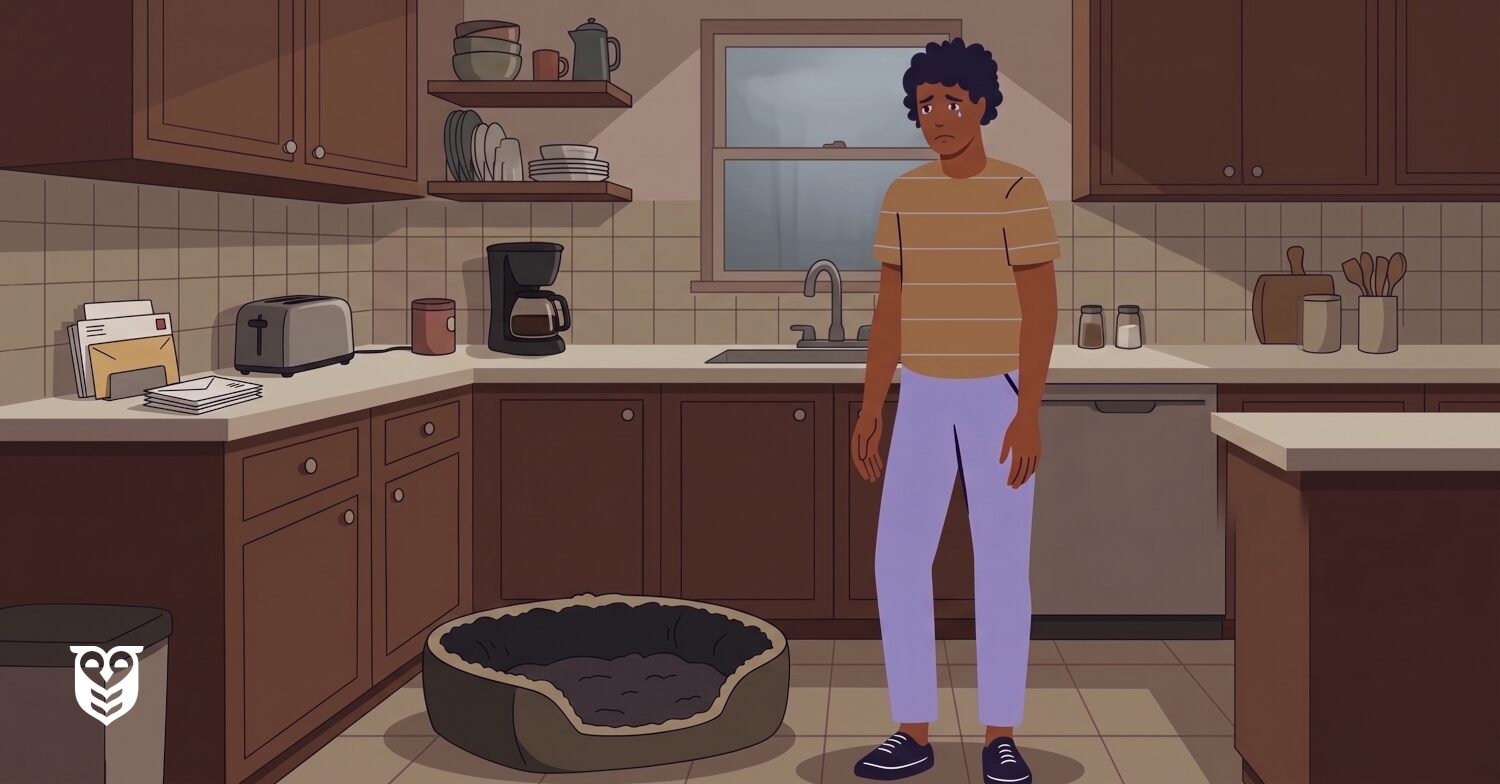
What Is Disenfranchised Grief?
The term was first introduced by grief scholar Dr. Kenneth Doka, who defined it as “grief that persons experience when they incur a loss that is not or cannot be openly acknowledged, publicly mourned, or socially supported.” In other words, it’s grief that the world around you doesn’t recognize as “real” — even when it feels absolutely real to you.
Disenfranchised losses are everywhere, yet remain largely invisible. They include the death of a pet, the end of a close friendship, a miscarriage or pregnancy loss, the loss of a relationship that wasn’t officially recognized, grief after estrangement, and even the loss of a future you had imagined — such as a career opportunity, a dream, or a sense of identity. Losses tied to stigmatized deaths, such as suicide or addiction, are also commonly disenfranchised, as survivors are often denied the full compassion extended to other bereaved people.
Why It Hurts More
“In my practice as a psychotherapist, what seems to compound the cutting pain of disenfranchised grief for my clients is the shame that is often piled on by the person experiencing it, loved ones, our social circle, or society at large,” says Jillian. “Shame is insidious because unlike the ‘I did something bad’ undercurrent of guilt, shame’s tagline is ‘I am bad. I’m the problem. I need to disappear. I need to hide.’”
Disenfranchised grief is painful not just because of the loss itself, but because of the isolation that surrounds it. Research published in Death Studies found that people whose grief was not socially recognized experienced more negative emotional reactions and were seen as less legitimate in their suffering than those grieving more socially “acceptable” losses. That added layer — feeling like you have to justify your pain — can compound the grief significantly.
Jillian points out that, “Disenfranchised grief often leads to hiding the hurt for fear of how it will be perceived as illegitimate or ridiculous. I hear echoes of shame when I hear statements like, ‘What happened to [this other person/group] is way worse than what happened to me. I really shouldn’t complain.’ Shame also rears its head in sentiments like, ‘I contributed to why the connection ended, so what right do I have to be sad about it,’ or ‘People tell me I can’t miss what I didn’t have, and that I should be happy that I was adopted by a loving family when I was a kid. Maybe they’re right. That’s more than a lot of people get.’”
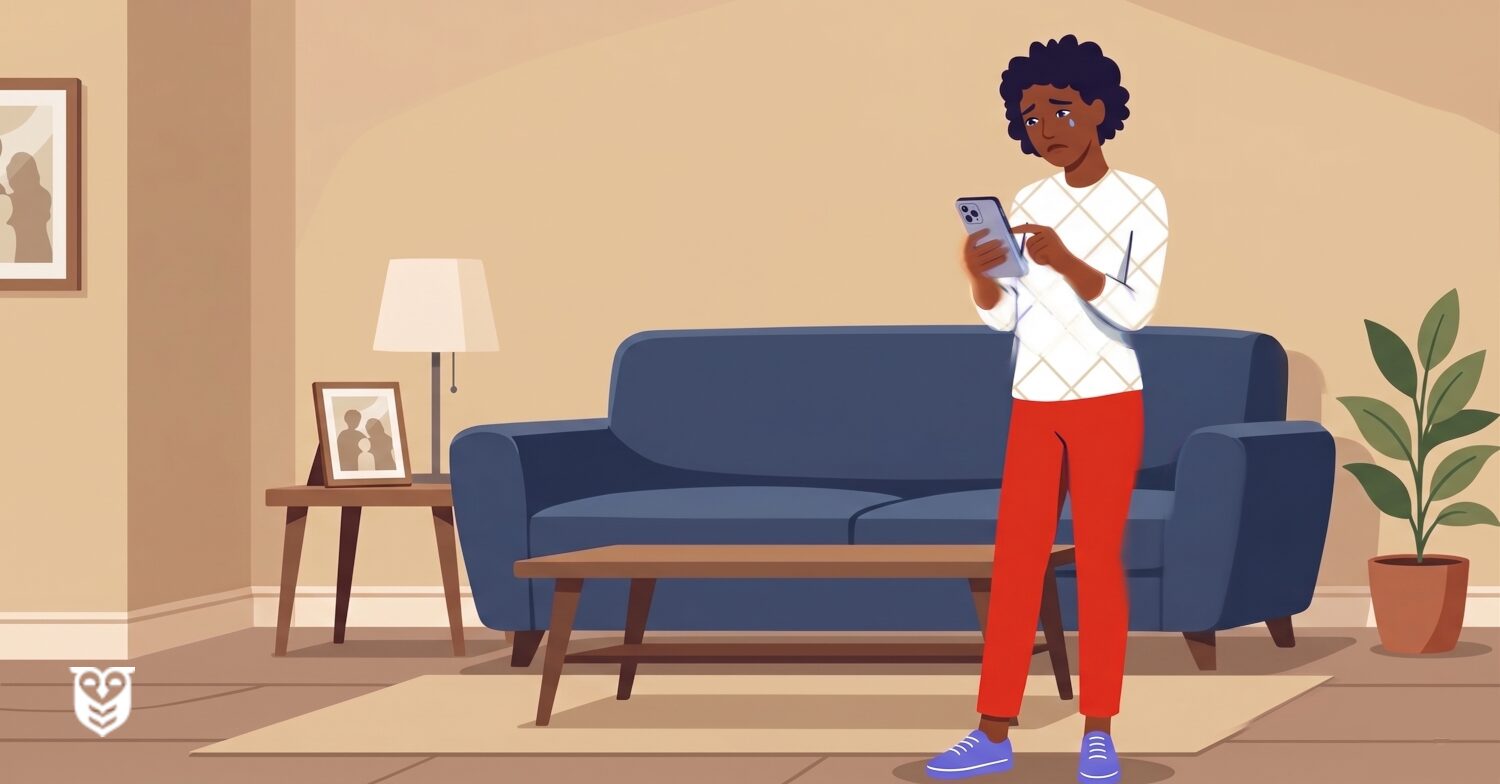
Research also shows that people can self-disenfranchise, suppressing their own grief by telling themselves they shouldn’t feel so devastated. This internal silencing is just as damaging as external dismissal.
“The agony of the hurt plus watering down the impact on us or even silencing ourselves can prolong the grief. Once that happens, we start to live in a state of perpetual numbing, because we do not feel we have permission to feel.”
Consider pet loss: a 2025 study published in Omega: Journal of Death and Dying found that grieving pet owners experienced significant emotional burden and isolation, and that healing was strongly tied to social recognition and validation. Nearly 93% of grieving pet owners in one study reported significant life disruptions following the death of their pet. The bond was real. The grief is real.
The same is true for friendship loss. When a close friendship ends, people may experience the full stages of grief — denial, anger, bargaining, depression, and eventual acceptance — yet feel pressure to simply “get over it” because the loss doesn’t fit a recognized mold.
Claiming Your Grief: Practical Ways to Heal
Healing from disenfranchised grief begins with one essential act: giving yourself permission to grieve. Here are practical steps to help you reclaim that right.
1. Name the loss out loud. Simply identifying what you’ve lost — and calling it a real loss — is a powerful first step. Journaling can help externalize what you’re carrying internally. Write about the relationship, what it meant to you, and what the absence feels like now.
“We can’t heal what we don’t reveal,” says Jillian. “I want to validate that you have permission to address the loss: even if you’ve labeled the loss as ‘small,’ even if the loss occurred five decades ago, even if…[insert your situation here]. You have permission to write it out, cry it out, talk it out, feel it out.”
2. Create your own rituals. Most disenfranchised losses lack formal ceremonies. You don’t need society’s permission to make one. Plant a tree, write a letter, hold a small remembrance, or donate to a cause in honor of what was lost. Ritual creates space for grief to be honored.
3. Find your people. Seek out communities — online or in-person — that understand your specific loss. Pet loss support groups, grief forums, and therapy communities exist precisely because these losses matter. Social support is meaningfully linked to how we process disenfranchised grief.
4. Practice self-compassion. Treat yourself with the same gentleness you would extend to a friend. Mindfulness practices and self-compassionate self-talk can help interrupt the inner voice that tells you your grief is “too much.”
5. Consider therapy. A grief-informed therapist can offer what society often doesn’t: genuine validation. Therapy provides a safe space to process losses that the world around you may minimize or misunderstand. You don’t need to be in crisis to benefit from that kind of support.
6. Engage in meaning-making. Grief researcher Robert Neimeyer describes healing as a process of rebuilding meaning after a loss disrupts your understanding of the world. Ask yourself: What did this relationship or loss teach you? How did it shape who you are? Honoring the significance of what you lost is part of integrating it.
Your Grief Is Valid
“Connection is key,” says Jillian. “As humans, we are built for being seen and known. Disenfranchised grief walls off our hearts and experiences, as it keeps us from putting words to our loss and connecting deeply with ourselves and others. This might look different depending on what season of life you are in. Whether in community, with loved ones, or on your own, make your little corner of the world one where you take up space and acknowledge your grief in order to move forward through it and with it. “
Grief doesn’t require a death certificate to be real. It doesn’t require that anyone else understand it, validate it, or show up with condolences. If something mattered to you, losing it is worth grieving — fully and without apology.
You don’t have to earn the right to hurt. You just have to let yourself feel what you’re feeling.
If you or someone you love is would benefit from mental healthcare support, we are here to help. You can contact Athena Care’s clinics (open Monday–Friday, 7am–6pm) to learn more. Remember, help is available; you and your family don’t have to face mental health challenges alone.
To learn more about different options for mental healthcare, you fill out this short contact form, or call/text us at +1 877-641-1155 or email [email protected].
Contact us today
If you or someone you love would benefit from talking to a mental health provider in Tennessee, call or text:
877-641-1155
One of our Care Coordinators will help you get the care you need.

Jillian Richardson, LPC-MHSP
Therapist
Jillian is a Licensed Therapist and Mental Health Service Provider (LPC-MHSP No. 3898) who empowers and equips adults in managing episodic, chronic, and grief-related depression; generalized and social anxiety; and trauma reactivity and avoidance.

Meg Stein, CFP
Editor
Meg is a certified mindfulness instructor and works at Alive and Aware Practice in Durham, NC. She has over ten years of experience as a content creator and marketing consultant, working in mental healthcare and social justice.
Sources:
Cameron, D. (2025). Disenfranchised grief and meaning reconstruction in the wake of animal loss. Omega: Journal of Death and Dying. https://doi.org/10.1177/00302228251410992
Cesur-Soysal, G., & Arı, E. (2024). How we disenfranchise grief for self and other: An empirical study. Omega: Journal of Death and Dying, 89(2), 530–549. https://doi.org/10.1177/00302228221075203
Cha Psychology. (2025, February 18). Pet loss and grief. https://www.chapsychology.com/blog/pet-loss-and-grief
HelpGuide. (2024). Coping with grief and loss: Stages of grief and how to heal. https://www.helpguide.org/mental-health/grief/coping-with-grief-and-loss
Lindner Center of Hope. (2025, August 5). Understanding the grieving process when a pet dies. https://lindnercenterofhope.org/blog/understanding-the-grieving-process-when-a-pet-dies-support-for-individuals-families-and-therapists/
Ohio State University Veterinary Medical Center. (2024). Coping with the loss of a pet. https://vmc.vet.osu.edu/sites/default/files/documents/coping_with_loss_brochure_2024_web.pdf
Rula. (2025, March). Grieving a friendship breakup and 6 healthy coping mechanisms. https://www.rula.com/blog/grieving-friendship/
Sarper, E., & Rodrigues, D. L. (2025). The stigmatization of prolonged grief disorder and disenfranchised grief: A vignette-based experimental study. Death Studies, 49(5), 535–545. https://doi.org/10.1080/07481187.2024.2340726
Schoo, C., Azhar, Y., Mughal, S., et al. (2025, April 12). Grief and prolonged grief disorder. In StatPearls [Internet]. StatPearls Publishing. https://www.ncbi.nlm.nih.gov/books/NBK507832/