


Many males who are struggling never say so. They say they’re tired, stressed, or “fine.”
Meanwhile they work longer, drink more, snap at people they love, or go quiet. If someone in your life fits that picture, you may be able to help more than you realize.
Athena Care therapist Jillian Richardson, LPC-MHSP shares more on practical, effective ways to understand where males may be coming from and to encourage them to seek help.
Wondering if you have depression? Jump to a confidential self- assessment.

Why depression in men goes unnoticed
Jilllian shares research from the American Journal for Men’s Health: “Some men may manifest depression in ways not represented in the diagnostic criteria. Examples include over-involvement in work, anger, isolation, help-seeking avoidance, and physical pains. Also, research has demonstrated that men who subscribe to traditional male gender role norms [i.e. be a winner, be a provider/protector, maintain control over one’s feelings] tend to report negative help-seeking attitudes and yet frequently have depressive symptoms. Collectively, these factors may account for significant under-diagnosis of depression in men.”
Depression in males doesn’t always look like sadness. They may seem angry or irritable instead, or show physical symptoms like a racing heart, chronic headaches, or digestive problems. They are also more likely to see a provider about those physical issues than about their mood, and more likely to use alcohol or drugs to cope. So the depression gets mislabeled as a bad temper, a drinking problem, or a bad back, and the real cause goes untreated.
Socialization plays a big role. Many boys learn to be self-reliant, stoic, and tough, and to treat emotions as weakness. A systematic review of 47 articles found that fear of being seen as less masculine is a recurring barrier to seeking help, and that men sometimes use binge drinking and substance use to manage depression, anxiety, and stress. A recent meta-analysis found that men are less likely than women to seek professional help, and that stronger adherence to traditional masculinity is linked to more negative attitudes toward therapy and more self-stigma. In a study of 326 U.S. men, greater endorsement of masculine norms went with greater help-seeking self-stigma, which in turn was linked to higher perceived stress.
Practical pressures add to this. Many men tie their worth to being a provider, so job loss or financial strain can feel like personal failure. Friendships often thin out after young adulthood, and many men have no one to talk to. Alcohol and drugs can mask the pain for a while, then make the depression worse.
Signs of depression in males
Jillian shares more about the pioneering research of Dr. William Pollack at Harvard Medical School, who established that depression in men and boys is a vastly under-diagnosed public health crisis. Dr. Pollack found that common symptoms that may go unnoticed in men include:
- Increased withdrawal from relationships (which may be denied by patient).
- Overinvolvement with work activities: may reach a level of obsessional concern, masked by comments about “stress” or burnout.
- Increasingly rigid demands for autonomy.
- Shift in the interest level of sexual encounters: may be a decrease or an increase (differentiate from mania).
- Increase in intensity or frequency of angry outbursts.
- Denial of any sadness and an inability to cry.
- Harsh self-criticism: Often focusing on failures in the arenas of provider and/or protector.
- Depleted or impulsive mood.
- Avoiding the help of others: The “I can do it myself” syndrome.
How to help a man in your life
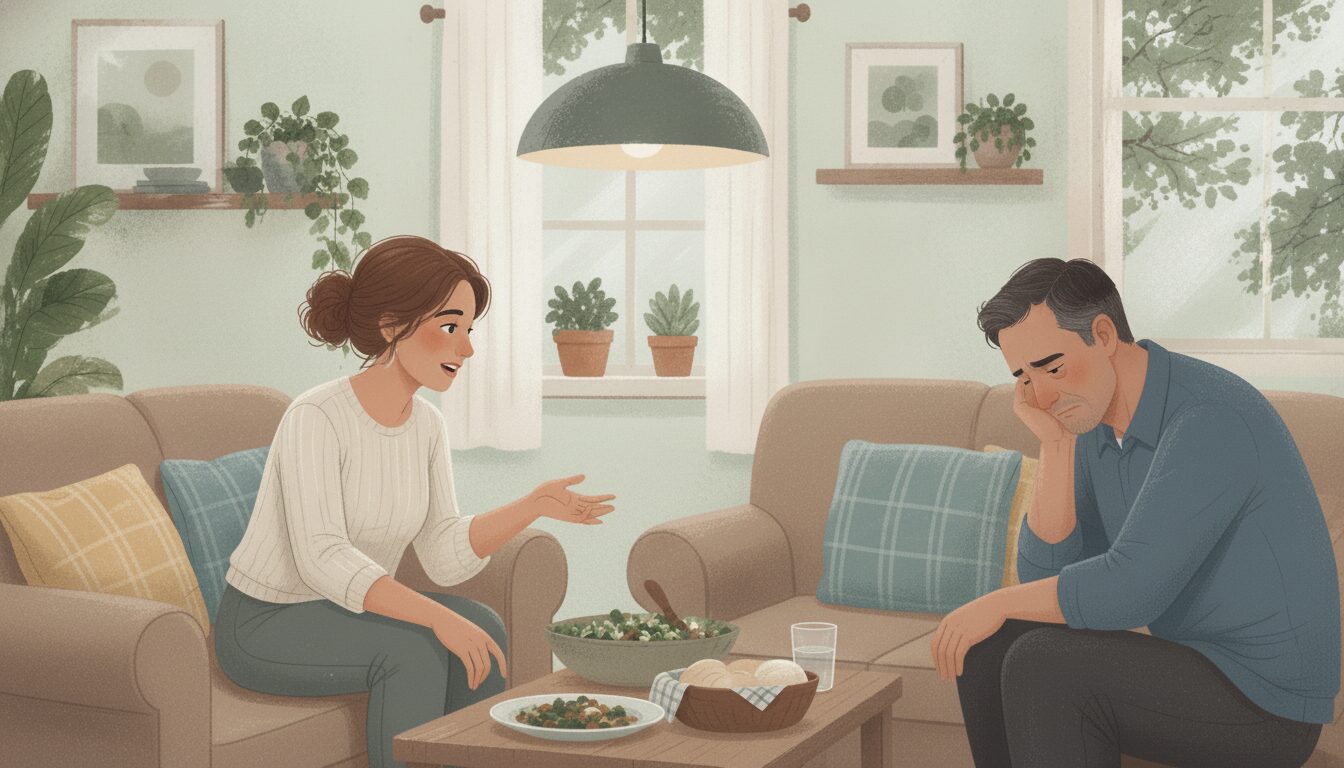
Choose the moment. Talk privately and without pressure. Many males open up more easily side by side, such as in a car, on a walk, or while fishing, than face to face across a table.
Describe what you see, not what you think he has. Try: “You’ve seemed worn down lately, and I’m worried about you. I’m not going anywhere.” That works better than “I think you’re depressed.”
Listen more than you fix. Skip “man up” and “other people have it worse.” Don’t rush to solutions. Saying “that sounds really heavy” can do more than advice.
Frame help as practical. Many males respond to this approach: “If you had chest pain, you’d get it checked. This is the same.” Suggesting a physical exam is an easy first step. Primary care providers routinely diagnose and treat depression, and they can rule out medical causes such as a thyroid disorder.
Lower the barriers. Offer to find a provider, sit with him while he books the appointment, or drive him there. Then follow up, because one “I’m fine” isn’t the final answer.
Take warning signs seriously. If he talks about being a burden, feeling hopeless, or wanting to die, ask directly whether he’s thinking about suicide. Asking doesn’t plant the idea. If he says that he is thinking about suicide, then stay with him and contact the 988 Suicide & Crisis Lifeline by calling or texting 988. If he’s in immediate danger, call 911.
If you’re a male helping another male, you don’t need perfect words. Saying “I’ve been there” or “I’ve seen a counselor and it helped” can make help-seeking feel normal.
How a depressed male can start to heal
If you’re the one struggling, you don’t have to fix everything at once. Start small.
- Tell one person. A friend, brother, partner, or doctor is enough.
- Move your body. Even 30 minutes of walking a day can lift your mood.
- Protect your routine. Keep regular sleep and wake times and eat regular meals.
- Do what you can, when you can. Decide what must get done and what can wait, and put off major life decisions until you feel better.
- Look hard at your drinking. If alcohol or drugs have become your main way of coping, say so to a provider. Treating both together works best.
- Consider a men’s group. Hearing other men say what you’ve been thinking can be a relief.
- Healing for boys. Involvement in mentorship programs, team sports, or clubs, while also engaging in group or individual therapy with a therapist who specializes in children.
What therapy and medication can do
Depression is treatable. Treatment typically involves psychotherapy, medication, or both, and evidence-based therapies include cognitive behavioral therapy (CBT) and interpersonal therapy. CBT helps change the thought and behavior patterns that feed depression. Therapy can happen in person or by telehealth, which many men find easier to start.
For milder depression, therapy is often tried first. For moderate or severe depression, medication is usually part of the initial plan. Antidepressants usually take 4 to 8 weeks to work, and sleep, appetite, and concentration often improve before mood does. It may take several tries to find the right medication with the fewest side effects. Give it time, report side effects to your provider, and don’t stop abruptly without medical guidance, since that can cause withdrawal symptoms. Medication management with a provider keeps the dose and drug matched to your needs, and therapy teaches skills that last after the prescription ends.
Asking for help isn’t weakness. It’s what a man does when he’s decided he’s worth fighting for, and the people who love him are usually relieved when he does.with others through coping, depression is a debilitating condition that strips away a persons energy, vitality and health.”
We’re here to help
If any of the above resonated with you or someone you love, reach out to Athena Care so we can help. You can contact us by filling out this short form or call/text us at +1 877-641-1155 or email [email protected].
Wondering if you have symptoms of depression?
Take this short, confidential self-assessment screener

Jillian Richardson, LPC-MHSP
Therapist
Jillian is a Licensed Therapist and Mental Health Service Provider (LPC-MHSP No. 3898) who empowers and equips adults in managing episodic, chronic, and grief-related depression; generalized and social anxiety; and trauma reactivity and avoidance.

Meg Stein, CFP
Editor
Meg is a certified mindfulness instructor and works at Alive and Aware Practice in Durham, NC. She has over ten years of experience as a content creator and marketing consultant, working in mental healthcare and social justice.
Sources:
Mokhwelepa, L. W., & Sumbane, G. O. (2025). Men’s mental health matters: The impact of traditional masculinity norms on men’s willingness to seek mental health support; A systematic review of literature. American Journal of Men’s Health, 19(3). https://doi.org/10.1177/15579883251321670
Mostoller, A. M., & Mickelson, K. D. (2024). Masculinity and mental well-being: The role of stigma attached to help-seeking among men. Sex Roles, 90(3), 353–362. https://doi.org/10.1007/s11199-024-01457-2
National Institute of Mental Health. (n.d.). Depression. U.S. Department of Health and Human Services, National Institutes of Health. Retrieved October 12, 2026, from https://www.nimh.nih.gov/health/publications/depression
Rochlen, A. B., Paterniti, D. A., Epstein, R. M., Duberstein, P., Willeford, L., & Kravitz, R. L. (2010). Barriers in diagnosing and treating men with depression: A focus group report. American Journal of Men’s Health, 4(2), 167–175. https://doi.org/10.1177/1557988309335823
Üzümçeker, E. (2025). Traditional masculinity and men’s psychological help-seeking: A meta-analysis. International Journal of Psychology, 60, Article e70031. https://doi.org/10.1002/ijop.70031