

Deciding whether to try medication for depression, anxiety, or ADHD is rarely a clean yes or no. It’s usually a tangle of hope and hesitation. You want to feel better, but a handful of quiet worries keep talking you out of the appointment.
That’s normal, and the worries deserve to be taken seriously. The good news is that most of them have better answers than the ones your anxiety is feeding you at 2 a.m. — and a lot of recent research backs that up.
We asked care provider Taylor Kemp, LPC-MHSP to respond to the concerns he hears most often. His answers are direct, and they’re meant to help you make the right decision for you. We also include a free, confidential self-assessment tool that can help you determine if medication could be a good next step.
“I don’t want to be a zombie.”
Fair. And if that’s how you feel on a medication, tell your prescriber. The right med at the right dose should help you feel more like yourself, not less like you.
The fear is common, but the evidence is reassuring. A 2025 analysis in Psychiatric Times pooling three randomized trials found that emotional responsiveness actually improved, on average, during antidepressant treatment, and fewer than 6% of people felt more emotionally blunted than they had before starting. When flatness does show up, the standard response is to adjust the dose or switch medications — exactly the conversation Taylor is pointing you toward.
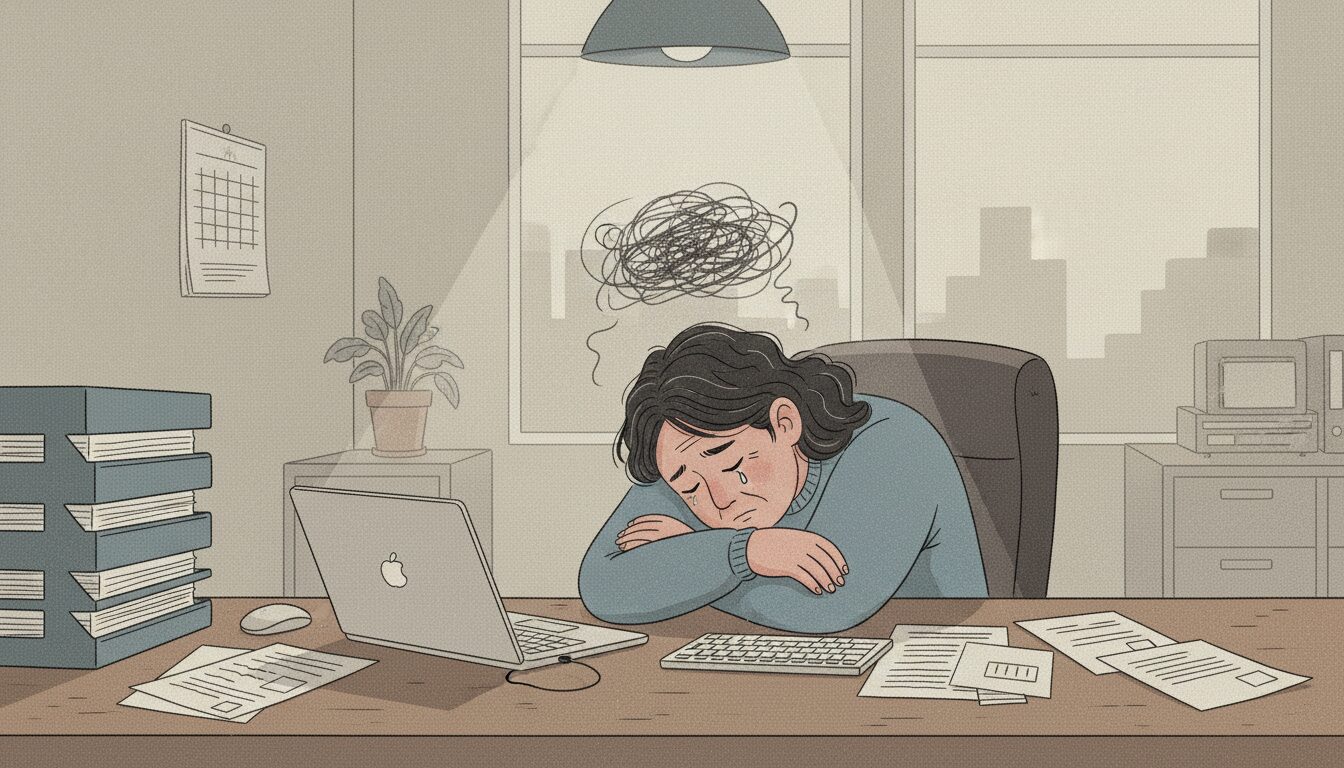
“I should be able to handle this on my own.”
You probably say that about everything. But you don’t set your own broken arm, and you don’t rewire your own house. Getting help is one of the wisest things you can do.
Needing treatment is not a sign of personal weakness. The American Psychiatric Association notes that more than half of people with a mental illness don’t get help, often because worry and self-doubt talk them out of it. Reaching for a tool isn’t quitting on yourself — it’s strategy.
“What if it changes who I am?”
Here’s the thing: anxiety, depression, and trauma have already made changes to you and your life. The right medication can clear the fog so you can actually show up as yourself again.
Untreated depression isn’t neutral background noise. It’s one of the leading causes of disability worldwide, reshaping how people function at work, at home, and in their relationships. And there’s a twist worth knowing: some researchers now argue that the emotional flatness people fear is frequently a symptom of untreated depression itself, not the medication. Treatment is often what gives that part of you back.
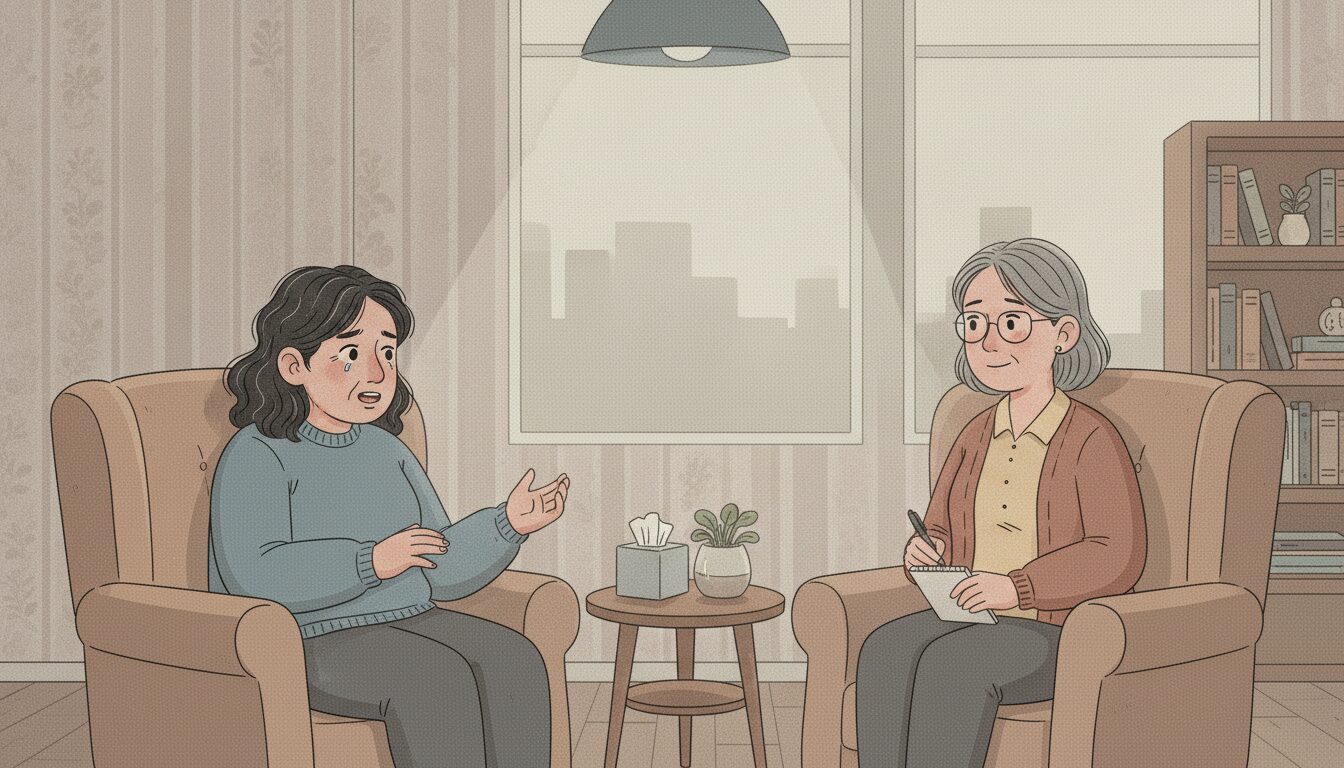
“I tried one once, and it was awful.”
One bad experience doesn’t mean the whole toolbox is broken. There are dozens of options, and finding the right fit takes honest conversation with your prescriber, not guessing and quitting.
There’s a real method to it. It’s worth giving each medication a fair trial — usually a couple of months at an adequate dose — and, if it falls short, switching to another medication, since several are available and they work in different ways. The first thing you tried was one data point, not a verdict on all of them.
“I don’t want to be on it forever.”
Some people are; some people aren’t. That’s a conversation, not a sentence. Medication can be a bridge, a long-term tool, or something in between. You and your prescriber decide that together.
The evidence supports that flexibility. Guidelines commonly suggest coming off medication after a stretch of feeling well — often 6 to 9 months. And a large 2025 review in The Lancet Psychiatry found that people who taper gradually, ideally with therapy alongside, can come off successfully, with slow tapering being much safer than stopping abruptly. The key word is gradual, and the decision is always yours to make with your prescriber.
“People will judge me.”
Some might. But the people in your corner, the ones who actually matter, want you to be okay more than they want you to be impressive.
Stigma is real, but it’s diminishing, and people are actively pushing back on it. A 2025 meta-analysis in JAMA Network Open covering nearly 100 trials found that anti-stigma efforts measurably improve attitudes and increase people’s willingness to seek help. Treatment is far more common — and far more accepted — than the shame around it would have you believe.
Next steps
Every one of these worries makes sense, and none of them has to be the end of the conversation. Medication isn’t magic, and it isn’t a moral test. It’s one tool among several — often used alongside therapy, sleep, movement, and support — that can help you feel steadier and more like yourself.
If you’re on the fence, you don’t have to have it all figured out before you talk to someone. Bring the worries with you. A good prescriber expects them, welcomes them, and will work through them with you, one honest question at a time.
If any of the above resonated with you or someone you love, reach out to Athena Care so we can help. You can contact us by filling out this short form or call/text us at +1 877-641-1155 or email [email protected].
Could medication help you?
A free, confidential self-assessment tool

Taylor Kemp, LPC-MHSP
Therapist
As a clinician, Taylor practices as a generalist, with a primary focus from a Person-Centered and Cognitive Behavioral approach. He has received training in Cognitive Behavioral therapy, Cognitive Processing Therapy, and in the treatment of compulsive sexual behaviors. He is passionate about helping others walk through grief, depression, anxiety, trauma, addiction, and stage of life issues. Taylor works with adolescents age 12+, teens, and adults.

Meg Stein, CFP
Editor
Meg is a certified mindfulness instructor and works at Alive and Aware Practice in Durham, NC. She has over ten years of experience as a content creator and marketing consultant, working in mental healthcare and social justice.
Sources:
Psychiatric Times — “Antidepressants Do Not Work by Numbing Emotions” (2025). https://www.psychiatrictimes.com/view/antidepressants-do-not-work-by-numbing-emotions
Mayo Clinic — “Mental health: Overcoming the stigma of mental illness” (medical review 2025). https://www.mayoclinic.org/diseases-conditions/mental-illness/in-depth/mental-health/art-20046477
Mayo Clinic Press — “Adjusting your depression treatment” (2024). https://mcpress.mayoclinic.org/major-depressive-disorder/adjusting-your-depression-treatment/
Medscape — “Tapering Antidepressants: What Strategy Works Best?” (December 2025), reporting on Ostuzzi et al., The Lancet Psychiatry. https://www.medscape.com/viewarticle/tapering-antidepressants-what-strategy-works-best-2025a1000yrn
AJMC — “Deprescribing Antidepressants Safely: New Evidence Supports Gradual Taper With Therapy” (December 2025). https://www.ajmc.com/view/deprescribing-antidepressants-safely-new-evidence-supports-gradual-taper-with-therapy
JAMA Network Open — Crockett MA, et al., “Interventions to Reduce Mental Health Stigma in Young People: A Systematic Review and Meta-Analysis” (2025). https://jamanetwork.com/journals/jamanetworkopen/fullarticle/2829229
Royal College of Psychiatrists — “Stopping antidepressants” (patient guidance). https://www.rcpsych.ac.uk/mental-health/treatments-and-wellbeing/stopping-antidepressants
American Psychiatric Association — “Stigma, Prejudice and Discrimination Against People with Mental Illness.” https://www.psychiatry.org/patients-families/stigma-and-discrimination
This article is for general information and isn’t a substitute for personalized medical advice. Talk with a licensed prescriber about your specific situation.