

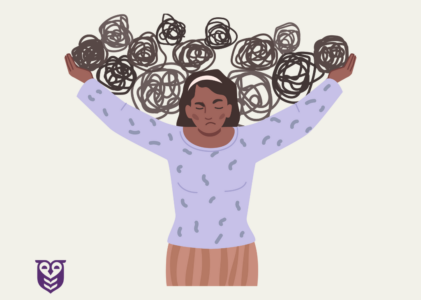
On the outside, you seem capable, organized, even impressive. On the inside, you’re exhausted. You lose track of time despite trying not to. You reread the same email multiple times before responding. Simple tasks feel overwhelming, not because they’re hard, but because you don’t know where to start. You procrastinate until panic sets in, then rush to finish everything at once.
For many women, this is what ADHD looks like. And it’s one reason ADHD often goes undiagnosed. When people picture ADHD, they often imagine a hyperactive child who can’t sit still, interrupts others, and struggles in school. Dr. Amanda Sparks- Bushnell, Chief Medical Officer at Athena Care, shares that “girls and women tend to be inattentive more than hyperactive and are less obvious or disruptive in a classroom or work setting.”1
Jump to ADHD assessment quiz
ADHD looks different in women
Carla Ciccone, author of Nowhere Girl: Life as a Member of ADHD’s Lost Generation writes, “People with inattentive ADHD can pay attention, and if something is of special interest to us, we display intense focus, but we lack the internal regulation required to make decisions about how and when to deploy our attention.”2
Symptoms of inattentive ADHD3 include:
- being unable to sustain attention during tasks
- day dreaming or mind wandering
- making careless mistakes
- often losing things
- being easily distracted by external stimuli
- being easily distracted by unrelated thoughts and forgetfulness
- becoming overstimulated easily
- struggling to control emotions
- being hyper-verbal4,5
It isn’t always obvious
Dr. Sparks-Bushnell says that AFAB people (assigned female at birth) are more often diagnosed as adults, with 61% of women being diagnosed as adults compared to 40% of men.
Rather than classic distraction or impulsivity, inattentive ADHD often shows up as chronic overwhelm, difficulty starting or finishing tasks, trouble prioritizing, forgetfulness around appointments or deadlines, difficulty controlling emotions, being hyper-verbal, and feeling easily overstimulated. Many women with ADHD struggle with time management, persistent self-criticism, and burnout from the constant effort it takes just to keep up.
ADHD is often misdiagnosed in women
“Frequently ADHD presents as anxiety or depression,” says Dr. Sparks-Bushnell. Many of the symptoms of inattentive ADHD overlap with other conditions, causing it to be mistaken for anxiety, depression, mood disorders, or even framed as personality traits like being “high-strung,” disorganized, or overly emotional.
“Women are often socialized to be multitaskers, which can conceal the ADHD.” She adds that many woman multitask and juggle well enough until they hit critical mass. “A marriage, baby, new job, or promotion can be the last straw that overcomes all the compensatory strategies.”
ADHD and Anxiety are often linked
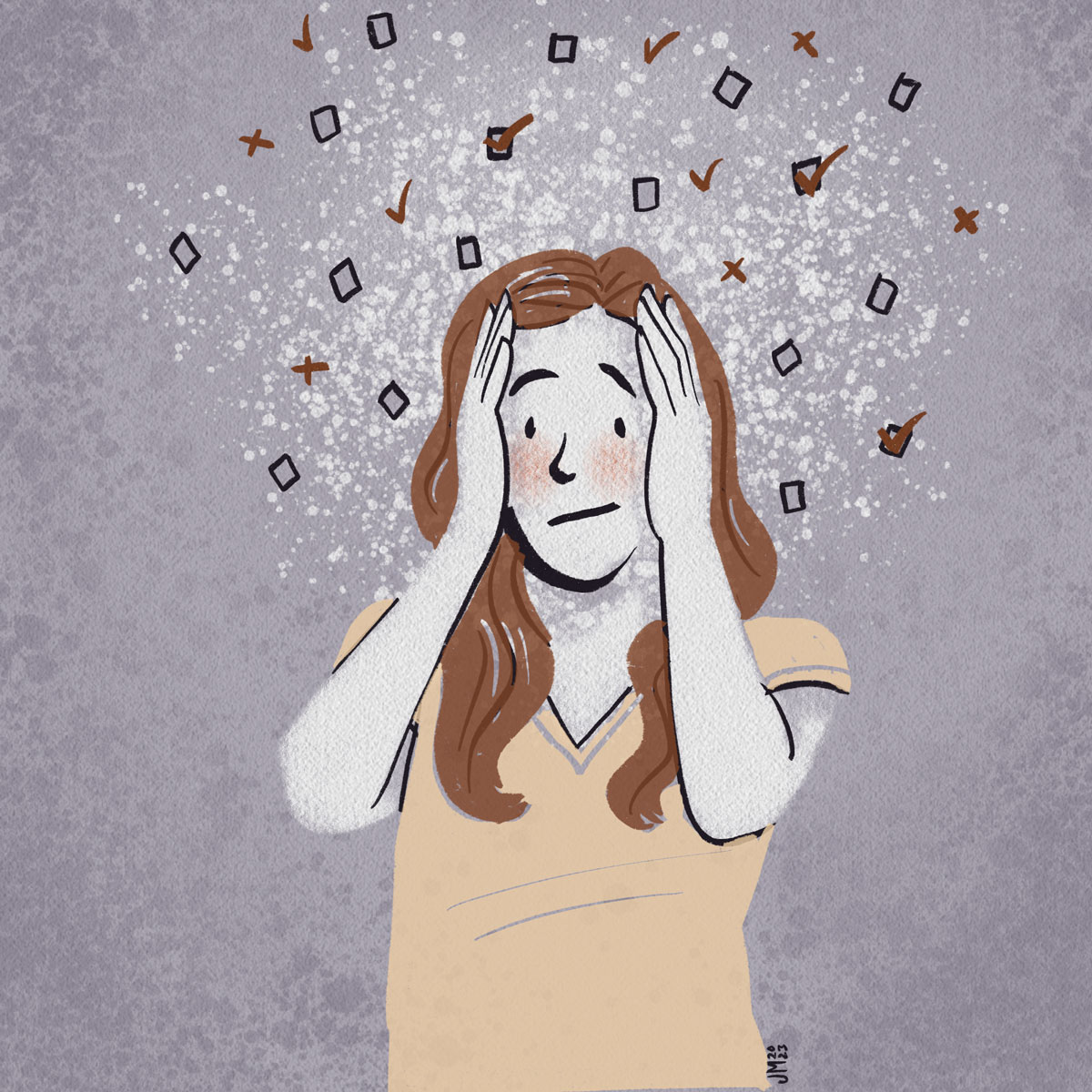
Dr. Sparks-Bushnell explains that, “Anxiety can be produced by ADHD itself. It’s like her brain is a wall of TVs with each one on a different channel and all are sending picture and sound. Imagine trying to do applied calculus in the middle of the Las Vegas strip. The amount of energy and effort needed to filter out all the other noise and pause all the other TVs is tremendous.” She adds that ADHD can frequently cause edginess and angst for this reason.
Benefits of a diagnosis
A diagnosis doesn’t change who you are, it explains you. For many women, it brings profound relief: “I’m not broken. I’m not lazy. My brain just works differently.” Understanding ADHD allows self-criticism to be replaced with self-compassion and opens the door to treatment that actually helps. Dr. Sparks-Bushnell adds that, “Good treatment should quiet all the TVs, but one or two at a time. That help should last from the start to the end of the day.”
Treatment varies from person to person
Medication, including stimulant and non-stimulant options, can improve focus, attention, and emotional regulation for many people. Dr. Sparks-Bushnell explains that, when using medication, it’s important to make adjustments so that it’s working properly. “Ideally if ADHD medication fades off near to bedtime, then it causes the person to start to feel tired. This naturally sets the frame for sleep.” But, she says that “if the ADHD medication leaves too soon, the person can have insomnia due to ADHD getting a second wind.” So it’s important that you work with your provider to make any necessary adjustments.
Other support for ADHD can come in the form of therapy, which can provide emotional regulation, address shame and self-blame, reduce anxiety related to ADHD, and build practical skills for organization and time management. Coaching and skills-based support can also be life-changing, helping individuals externalize reminders, break tasks into manageable steps, and work with, rather than against their natural rhythms.
If any of this sounds like you, remember that you don’t have to work this hard just to function. If you’ve spent your life pushing through, overcompensating, and wondering why everything feels so difficult, it may be time to look deeper. ADHD in women is real, common, and treatable. Seeking support doesn’t mean you’ve failed, it means you’re finally giving yourself the tools you deserve.
If you or someone you love would benefit from talking to a mental health provider in Tennessee, call or text:
877-641-1155
One of our Care Coordinators will help you get the care you need.
ADHD Quiz
Sources
- Dr. Amanda Sparks-Bushnell (n.d.). Athena Care. https://www.athenacare.health/amandasparksbushnell/
- Ciccone, C. (n.d.). Nowhere girl: Life as a member of ADHD’s lost generation. Penguin Random House. https://www.penguinrandomhouse.com/books/735723/nowhere-girl-by-carla-ciccone/
- Williams, P. (2019, September 1). 3 types of ADHD: Hyperactive, inattentive, and combined. ADDitude. https://www.additudemag.com/3-types-of-adhd/
- Ciccone, C. (2025, September 11). ADHD in women and girls: [Title of article]. USA TODAY. https://www.usatoday.com/story/entertainment/books/2025/09/11/adhd-in-women-girls-book-carla-ciccone/86073333007/
- Moustakis, M. (2025, July 9). Why are so many more women being diagnosed with ADHD? Smithsonian Magazine. https://www.smithsonianmag.com/science-nature/why-are-so-many-more-women-being-diagnosed-with-adhd-180986909/

Dr. Amanda Sparks-Bushnell, Chief Medical Officer, M.D.
Psychiatrist
Dr. Amanda Sparks-Bushnell is a Board-Certified Psychiatrist who maintains a heartfelt commitment to transformative leadership and patient well-being. Her career is marked by a passion for enhancing medical services, fostering collaboration, and ensuring the utmost care for those she serves.

Meg Stein, CFP
Editor
Meg is a certified mindfulness instructor and works at Alive and Aware Practice in Durham, NC. She has over ten years of experience as a content creator and marketing consultant, working in mental healthcare and social justice.

Zyonn Smith
Contributor
Zyonn is a student at Tennessee State University studying for a degree in Mass Communications currently interning at Athena Care.