

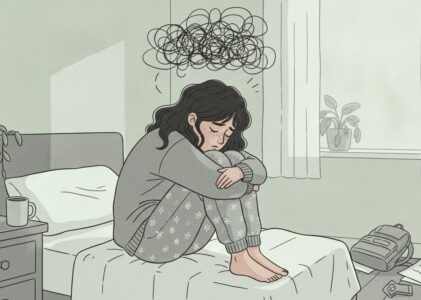
You’ve been sitting at your desk for an hour, heart pounding, stomach in knots, shoulders so tight they’re practically touching your ears. You haven’t run a marathon. You haven’t been in an accident. You’ve just been worrying about a work deadline — or maybe nothing specific at all. So why does your body feel like it’s under attack?
The answer lies in a system your brain designed to protect you. And the good news? Once you understand it, you can start working with it instead of against it.
Athena Care therapist, Extasy Grinn, LCSW shares more below about what signs to look for and practical tips for mitigating anxiety. We also include a free, confidential quiz to assess your level of anxiety.
Jump to quiz
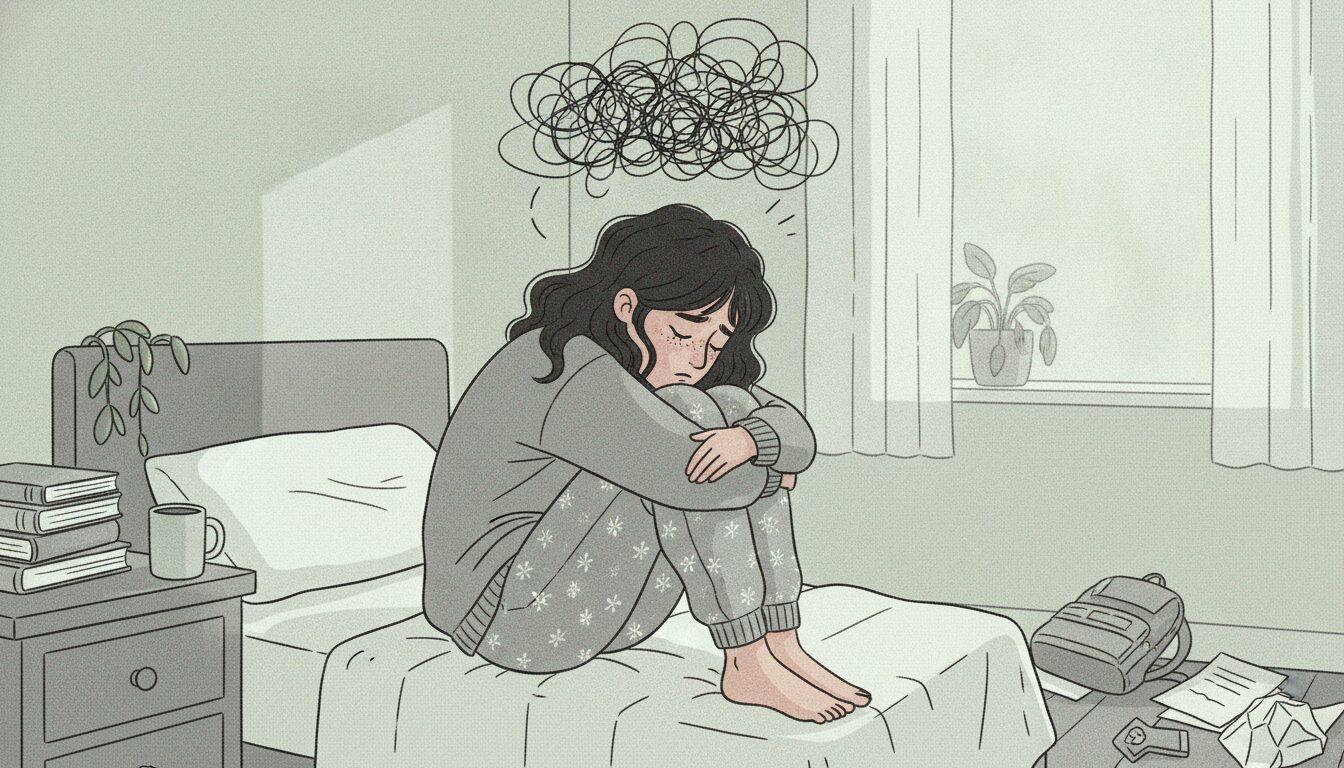
Your Body Isn’t Overreacting — It’s Doing Exactly What It Was Built to Do
“Anxiety is a whole-body state; it is not just a thought or emotion,” says Extasy. “It is a fight or flight response which causes your autonomic nervous system to get ready for action.”
Anxiety isn’t just a feeling. It’s a full-body neurological event. When your brain perceives a threat — real or imagined — it activates the amygdala, the brain’s alarm system, which fires off the fight-or-flight response. Stress hormones like cortisol and adrenaline flood your system, your heart rate climbs, blood flows away from your digestive organs and toward your muscles, and your breathing becomes rapid and shallow. This response evolved to help you outrun a predator. The problem is that your nervous system can’t easily tell the difference between a charging lion and a difficult conversation with your boss.
Anxiety disorders are closely tied to physical health, with nervous system hyperactivity being one of the primary mechanisms linking anxiety to real physiological harm over time — including cardiovascular strain. Anxiety is now the most common mental disorder globally, affecting an estimated 359 million people as of 2021.
“Anxiety is not all in your head, even though the emotion may start there,” says Extasy. “Your body is having a genuine response to the perceived threat.”
The Physical Symptoms: What to Look For
Many people living with anxiety don’t recognize it as such because they’re focused on what they feel in their bodies, not their minds.
“Your body experiences a physiological response and changes when you perceive any kind of threat which results in worry. Whether you see a spider or have a fear of the other shoe dropping,” says Extasy. “Anxiety can start with thoughts and cause physical sensations like a rapid heartbeat, shallow breath, sweating, shaking or tingling extremities.”
Here are the most common physical signs:
In your chest and heart: Racing or pounding heartbeat, chest tightness, or a sensation of pressure. These can be alarming and are sometimes mistaken for cardiac events.
In your breathing: Shortness of breath, a feeling of not being able to get a full breath, or rapid, shallow breathing that can trigger dizziness or tingling in the hands and face.
In your muscles: Tension in the shoulders, neck, or jaw; trembling or shaking; and fatigue from muscles being chronically primed for action.
In your stomach: Nausea, upset stomach, diarrhea, or cramping. The gut has its own extensive nervous system and is highly sensitive to stress hormones — which is why anxiety can feel like a stomach flu.
In your head: Headaches, dizziness, lightheadedness, or a sense of unreality — like you’re watching yourself from a distance.
In your sleep: Difficulty falling asleep or staying asleep, and waking up already feeling tense or on edge.
Other signs: Sweating, hot flashes or chills, and tingling or numbness — all part of the autonomic nervous system’s stress response.
Physiological symptoms of anxiety also include choking sensations, palpitations, and gastrointestinal distress — symptoms that can send people to urgent care before they ever consider a mental health explanation. Persistent worry activates the body’s fight-or-flight response, triggering stress hormones that produce exactly these kinds of wide-ranging physical effects: muscle tension, rapid breathing, headaches, insomnia, and cardiovascular and gastrointestinal issues.
The key question that distinguishes anxiety from a medical condition isn’t which symptoms you have — it’s whether those symptoms follow patterns of stress, worry, or perceived threat, and whether medical tests come back normal.
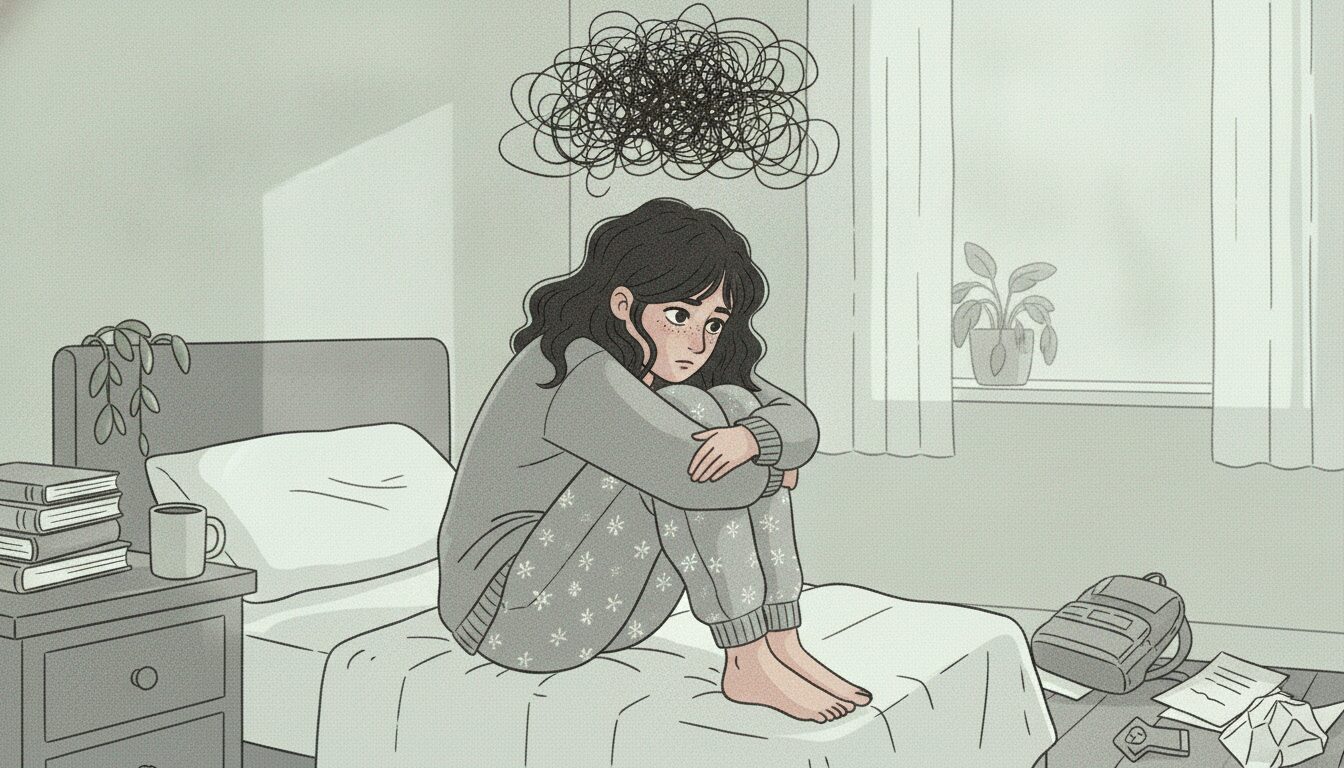
Five Things You Can Do Starting Today
Understanding anxiety is important. Doing something about it is better. Here are evidence-backed strategies that work — no prescription required.
1. Slow your breathing down (for real this time). This is the single fastest way to interrupt the anxiety cycle. Research published in Stress and Health in 2025 found that slow, nasal, diaphragmatic breathing significantly improves parasympathetic nervous system activity, reduces cortisol, and decreases anxiety — and these benefits can show up in sessions as short as two to five minutes. Try this: inhale slowly through your nose for 4 counts, hold for 2, exhale through your mouth for 6. The extended exhale is the key — it activates your vagus nerve, which signals your body to stand down.
2. Name what’s happening. When your chest tightens and your stomach drops, your first instinct may be to panic about the panic. Instead, try labeling it: “This is my nervous system responding to stress. It’s doing its job.” Research in cognitive behavioral therapy consistently shows that naming an emotional state reduces its intensity. You’re not in danger — your body just thinks you are.
3. Move your body. Exercise is one of the most effective anxiety interventions available. The WHO recommends physical activity as a prevention strategy for anxiety disorders in adults, and the evidence is robust: movement burns off excess adrenaline, lowers baseline cortisol, and improves sleep. You don’t need to run. A 20-minute walk — especially outdoors — is enough to shift your nervous system.
4. Reduce avoidance, gradually. Anxiety grows in the spaces we avoid. If you’ve started skipping social situations, putting off difficult tasks, or staying home to stay safe, anxiety is expanding its territory. The therapeutic antidote is gradual, supported exposure — doing the thing that makes you anxious, in manageable doses, until your brain learns it isn’t dangerous. You can start small: reply to the email, make the phone call, walk into the room.
5. Audit your stimulants. Caffeine, alcohol, poor sleep, and excessive social media use all amplify the physical symptoms of anxiety. A 2024 American Psychiatric Association poll found that 43% of U.S. adults reported feeling more anxious than the previous year — a trend researchers increasingly link to chronic digital overstimulation and sleep disruption. Cutting back on coffee after noon, limiting alcohol, and setting a screen-off time before bed can produce noticeable changes within days.
When to Seek Professional Support
Self-help strategies are powerful, and they’re not always enough. If your anxiety is significantly interfering with work, relationships, or daily functioning; if physical symptoms are persistent or severe; or if you’ve been managing this alone for months — it’s time to talk to someone. Cognitive behavioral therapy (CBT) has the strongest evidence base for anxiety disorders, and access has expanded significantly through telehealth. Medication is also a legitimate, effective option for many people and doesn’t have to be permanent.
The bottom line: anxiety is not a character flaw, and it’s not just in your head. It is a real, physiological experience — and a highly treatable one. Your nervous system learned to be this vigilant. With the right support, it can learn something new.
Ready to see where you stand? Take the self-assessment quiz linked below to get a clearer picture before your next conversation with a healthcare provider.
If any of the above resonated with you or someone you love, reach out to Athena Care so we can help. You can contact us by filling out this short form or call/text us at +1 877-641-1155 or email [email protected].
Assessment Quiz
If you’re experiencing persistent anxiety symptoms, consider speaking with a licensed mental health professional. Crisis support is available 24/7 by calling or texting 988.
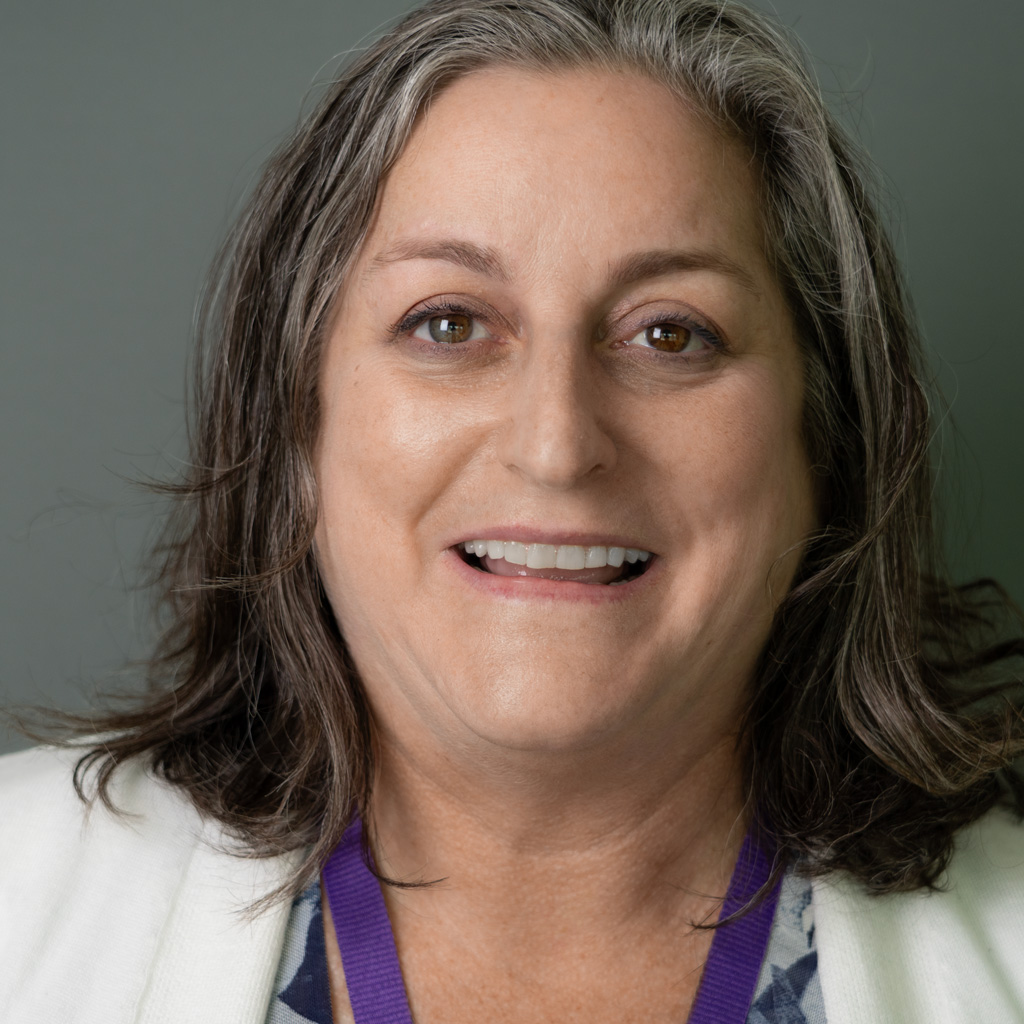
Extasy Grinn, LCSW
Therapist
Extasy is a Licensed Clinical Social Worker and provides individual therapy to adults. She has training and expertise in a variety of mental and behavioral health areas, including addiction treatment, geriatric care, child therapy and individual therapy with adults.

Meg Stein, CFP
Editor
Meg is a certified mindfulness instructor and works at Alive and Aware Practice in Durham, NC. She has over ten years of experience as a content creator and marketing consultant, working in mental healthcare and social justice.
Sources:
World Health Organization. (2025, September). Anxiety disorders: Fact sheet. https://www.who.int/news-room/fact-sheets/detail/anxiety-disorders
National Institute of Mental Health (NIMH). Anxiety Disorders. https://www.nimh.nih.gov/health/topics/anxiety-disorders
Craske, M.G., et al. (Updated 2024). Anxiety. StatPearls / NIH National Library of Medicine. https://www.ncbi.nlm.nih.gov/books/NBK470361/
Little, J., et al. (2025). The A52 Breath Method: A narrative review of breathwork for mental health and stress resilience. Stress and Health. Wiley Online Library. https://onlinelibrary.wiley.com/doi/full/10.1002/smi.70098
American Psychiatric Association. (2024). Annual mental health poll. Reported via: https://whfoods.org/facts/anxiety-statistics/
University of California San Francisco. (2025, October). Could this novel therapy calm anxiety for millions of Americans? https://www.ucsf.edu/news/2025/10/430796/could-novel-therapy-calm-anxiety-millions-americans