

Short answer: yes, for most people, it genuinely can. If you or someone you love is dealing with obsessive-compulsive disorder, medication isn’t a last resort or a crutch — it’s one of two first-line, evidence-backed treatments, and for many people it makes a big difference.
Athena Care psychiatrist, Dr. Timothy J. Bilbruck, M.D. shares more on what that looks like in practice.
Wondering if you have OCD? Jump to a short, self-assessment screening.
What is OCD?
OCD is a long-lasting condition built around two pieces: obsessions and compulsions, though some people have mainly one or the other. Obsessions are repeated thoughts, urges, or mental images that are intrusive, unwanted, and make most people anxious. Compulsions are the repetitive behaviors — or mental rituals — a person feels driven to perform, usually to neutralize that anxiety. “Obsessive-compulsive disorder can be an incredibly distressing and debilitating condition,” says Dr. Bilbruck. “What makes OCD so difficult is that people experience intrusive, unwanted thoughts that persist despite their best efforts to dismiss them.”
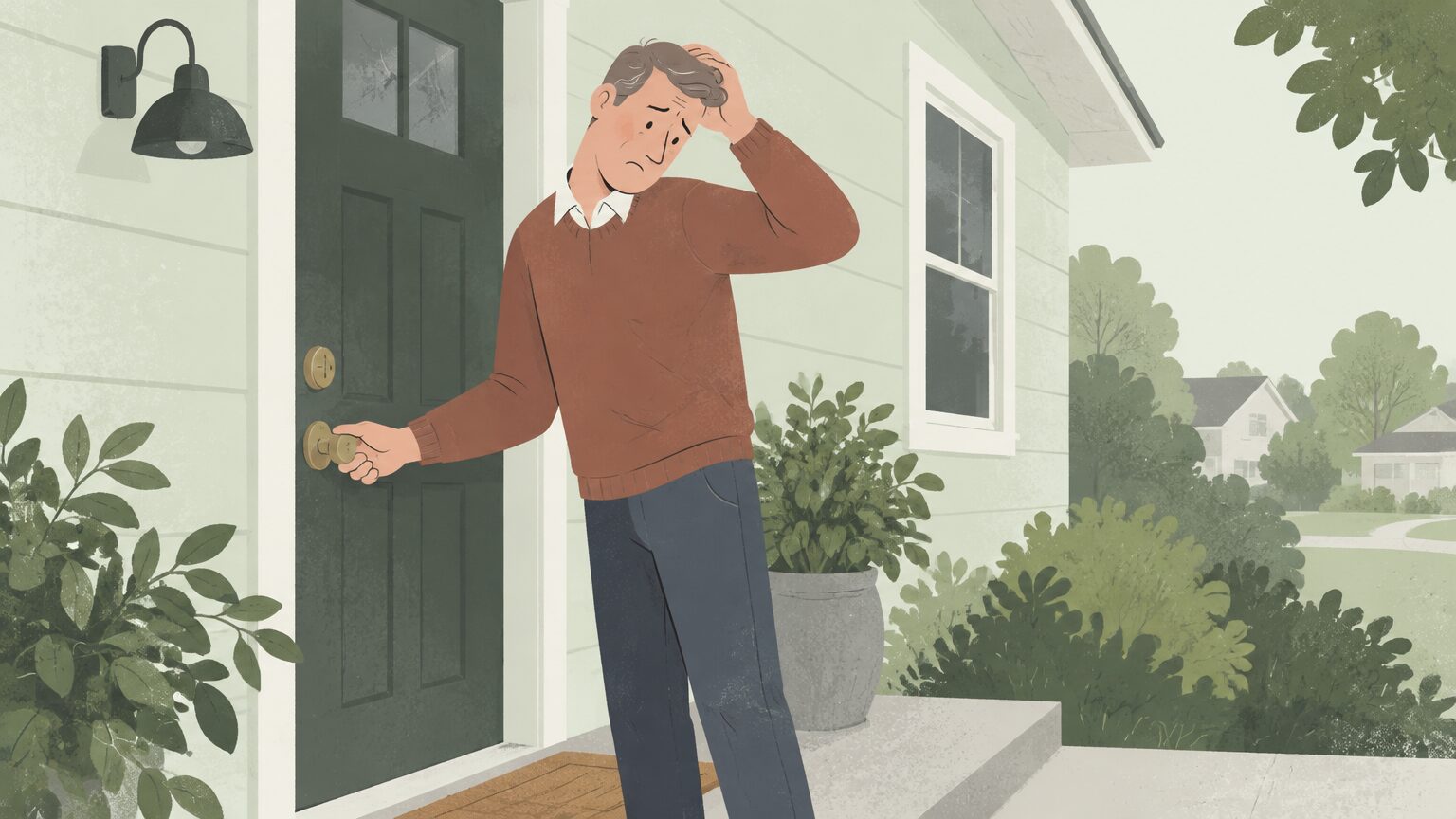
This isn’t the same as being a neat freak or a perfectionist. People with OCD generally can’t control their obsessions or compulsions even when they recognize they’re excessive, spend more than an hour a day on them, get no pleasure from the compulsions (just brief relief from anxiety), and experience real disruption to daily life as a result. A person might know, logically, that the stove is off — and still feel compelled to check it a dozen times before leaving the house.
Dr. Bilbruck shares more, “At its core, OCD often involves an intense struggle with uncertainty—the fear that something isn’t clean enough, that you may have harmed someone, or that you may have said or done something wrong. The person feels driven to do something to relieve that distress, whether it’s washing, checking, repeating certain actions, mentally reviewing events, or repeatedly seeking reassurance from others.”
The Impact of OCD
“The impact can be profound,” says Dr. Bilbruck. “People with OCD may have difficulty relaxing in their own homes, concentrating at work, maintaining relationships, or simply experiencing peace of mind. It’s not just about repetitive behaviors; it’s about how much time, energy, and emotional distress the disorder consumes.”
Obsessive-compulsive disorder can erode a person’s relationships and intimate life: in one study, the share of people with OCD who had no relationship was more than double that of the control group (27% vs. 12%). The same research notes that the social functioning of people with OCD was found to be worse than that of both the general population and patients with diabetes. Shame can make things worse, since patients often keep their symptoms secret for years because of embarrassment, which leaves the disorder untreated and leads to greater severity, social isolation, and lower self-efficacy.
Signs Worth Paying Attention To
OCD shows up differently from person to person, but some patterns are common. Watch for:
- Contamination fears paired with excessive washing or cleaning
- Checking rituals such as checking locks, appliances, or whether you hurt someone without realizing it
- Intrusive, distressing thoughts about harm, taboo subjects, or religious/moral concerns, often followed by mental rituals to “undo” them
- Need for symmetry or exactness, with rearranging or ordering that has to feel “just right”
- Counting, tapping, or repeating actions a specific number of times
- Avoidance of situations that might trigger obsessions, even when it narrows someone’s world considerably
Symptoms usually begin anytime between late childhood and young adulthood, and it’s common for OCD to show up alongside depression or another anxiety disorder. If these patterns are eating up significant time or causing real distress, it’s worth talking to a professional — OCD tends to get worse without treatment, not better on its own.
How Medication Helps
“Medication can make a tremendous difference,” says Dr. Bilbruck. “Selective serotonin reuptake inhibitors, or SSRIs, are among the first-line medications for OCD.”
Treatment often requires a longer trial and sometimes higher doses than are typically used for depression, with careful attention to tolerability and individual response. For many patients, medication can significantly reduce the intensity of obsessions and compulsions and make everyday life more manageable.
A few things make OCD treatment different from using these same drugs for depression or general anxiety:
Higher doses are usually needed. Treatment of OCD with SSRIs requires significantly higher doses than are typically used for depression or anxiety. Your prescriber isn’t overmedicating you — OCD symptoms genuinely respond better to doses at or near the top of the approved range.
It takes longer to work. Don’t expect quick results. Drug trials in OCD typically require 12 weeks or more at an adequate dose before you can fairly judge whether a medication is working, compared with just a few weeks for depression. Early improvement is a bonus, not the expectation.
Response rates are real but not universal. SSRIs produce response rates of up to 60% in people with OCD, which means a meaningful share of people need to try a second SSRI, switch to clomipramine, or add an augmenting medication. That’s a normal part of the process, not a sign that nothing will work for you.
Medication plus therapy beats medication alone. In a landmark study comparing clomipramine, cognitive behavioral therapy, the combination, and placebo, both groups receiving CBT — with or without medication — had faster, larger symptom reductions than medication alone. The therapy in question is Exposure and Response Prevention (ERP), a specific form of CBT built for OCD. If you’re only offered a prescription, it’s worth asking about ERP too.
Plan for the long haul, generally. Many people need to stay on medication for a year or more to protect their gains, since relapse risk is high if it’s stopped too early. This is something that you can talk about with your care provider.
Medication is not the only effective treatment, however. Exposure and response prevention, a specialized form of cognitive behavioral therapy, helps people learn to tolerate uncertainty and resist the compulsions that keep the OCD cycle going. Dr. Bilbruck shares that, “For many patients, the combination of medication and evidence-based psychotherapy offers an especially valuable approach to treatment. The goal is not simply to reduce symptoms, but to help people reclaim their time, their relationships, and their ability to live without OCD dictating their daily lives.”
The Bottom Line
OCD is treatable, and medication is a legitimate, well-studied part of that treatment. The most important steps you can take are finding a care provider iber who understands OCD-specific dosing and timelines, and then pair medication with ERP therapy when possible. You’ll also need to try any given medication for the full 10–12 weeks it needs before deciding whether or not it’s working. Relief is a realistic goal, even if it takes some trial and adjustment to get there.
We’re here to help
If any of the above resonated with you or someone you love, reach out to Athena Care so we can help. You can contact us by filling out this short form or call/text us at +1 877-641-1155 or email [email protected]. You can also take the short, self-assessment quiz below.
Do you have symptoms of OCD?

Dr. Tim Bilbruck, M.D.
Psychiatrist
Dr. Timothy J. Bilbruck, MD, is a psychiatrist who brings compassion, curiosity, and deep clinical experience to his work with people facing both mental health concerns and substance use challenges.
Meg Stein, CFP
Editor
Meg is a certified mindfulness instructor and works at Alive and Aware Practice in Durham, NC. She has over ten years of experience as a content creator and marketing consultant, working in mental healthcare and social justice.
Sources:
Brain & Behavior Research Foundation. (2026, February 9). Improving treatment outcomes for people with OCD. https://bbrfoundation.org/blog/improving-treatment-outcomes-people-ocd
Centre for Addiction and Mental Health. (n.d.). OCD: Pharmacotherapy. CAMH. https://www.camh.ca/en/professionals/treating-conditions-and-disorders/ocd/ocd—treatment/ocd—pharmacotherapy
International OCD Foundation. (2026, May 14). OCD treatment guide: Best evidence-based therapies, medications, and new advances. https://iocdf.org/about-ocd/ocd-treatment-guide/
Kaur, R., Garg, R., & Raj, R. (2023). Quality of life among patients with obsessive compulsive disorder: Impact of stigma, severity of illness, insight, and beliefs. Industrial Psychiatry Journal, 32(1), 130-135. https://doi.org/10.4103/ipj.ipj_22_22
National Institute of Mental Health. (2022). Obsessive-compulsive disorder: When unwanted thoughts or repetitive behaviors take over. U.S. Department of Health and Human Services. https://www.nimh.nih.gov/health/publications/obsessive-compulsive-disorder-when-unwanted-thoughts-or-repetitive-behaviors-take-over
Paxos, C. (2022). Moving beyond first-line treatment options for OCD. Mental Health Clinician, 12(5), 300–308. https://doi.org/10.9740/mhc.2022.10.300
Żerdziński, M., Burdzik, M., Żmuda, R., Witkowska-Berek, A., Dębski, P., Flajszok-Macierzyńska, N., Piegza, M., John-Ziaja, H., & Gorczyca, P. (2022). Sense of happiness and other aspects of quality of life in patients with obsessive-compulsive disorder. Frontiers in Psychiatry, 13, Article 1077337. https://doi.org/10.3389/fpsyt.2022.1077337