


Medication-free depression treatment in Cool Springs
If you’ve given 2 or 3 antidepressants a real chance, and you’re still suffering from depression, you’re not alone, and your next option doesn’t have to be another prescription. TMS is a medication-free, FDA-cleared treatment for depression, and we deliver it at our Cool Springs clinic at 341 Cool Springs Boulevard, Suite 140, right in Franklin’s healthcare corridor.
You can schedule a free, 15-minute inquiry call to get started.
What is TMS?
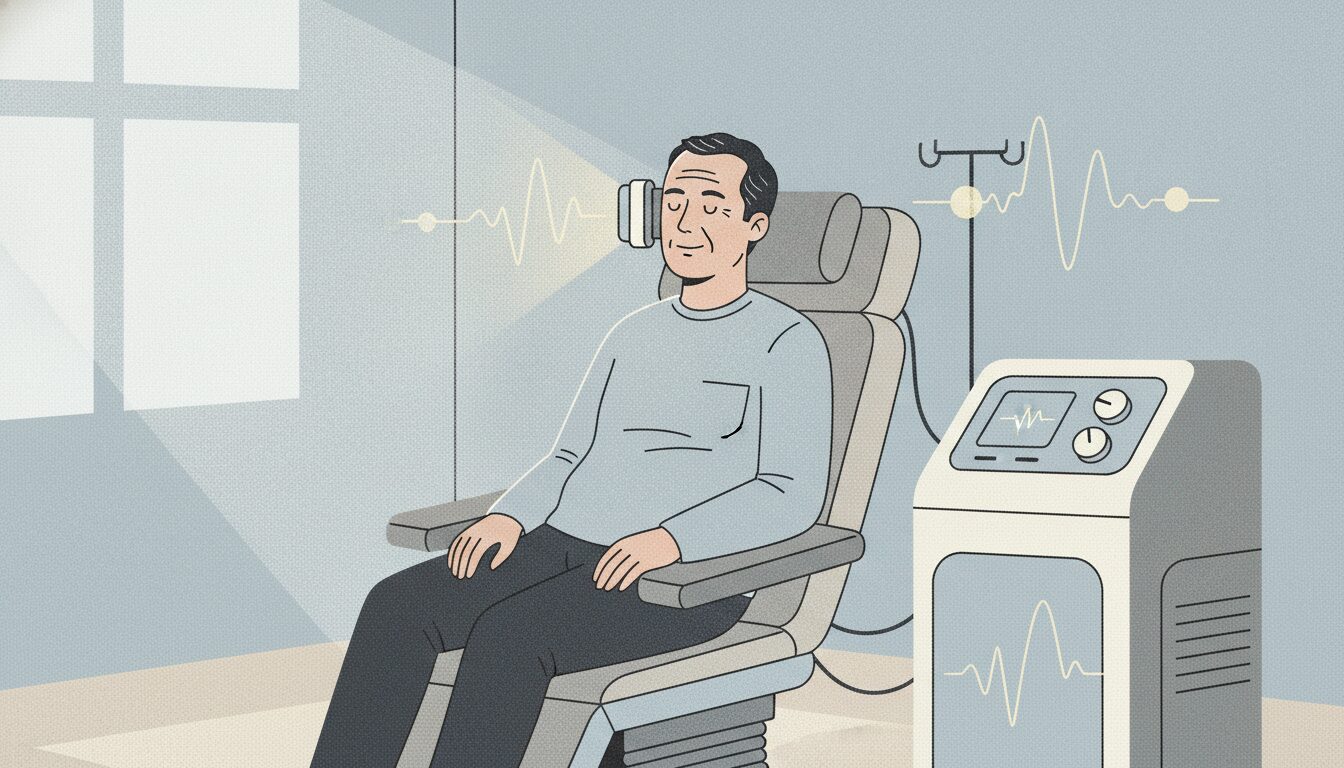
Transcranial magnetic stimulation uses focused magnetic pulses, delivered through a coil resting against your scalp, to gently reactivate the mood circuits in the left prefrontal cortex that run underactive in depression. There’s no anesthesia, no sedation, and nothing enters your bloodstream. TMS has been FDA-cleared for depression since 2008 [1] and studied in more than 100 clinical trials [3]. It’s often the next step when medications haven’t worked or their side effects have cost more than they gave. You can learn more about treatment-resistant depression here.
A treatment that fits a Williamson County schedule
A standard TMS course is 5 short sessions per week for 4 to 6 weeks, and each session runs 20 to 40 minutes. That cadence sounds demanding until you see how it actually fits: we start sessions at 8am, so a session before the office or after school drop-off is realistic, and because there’s no sedation, you drive yourself in and out and go straight back to your day. Our clinic sits in the Cool Springs corridor near the Williamson Medical Center campus and just off I-65, which keeps sessions convenient whether you work in Franklin, Brentwood, or commute into Nashville.
What a session feels like
You’ll settle into a recliner, fully awake, with earplugs in. The coil taps out rhythmic pulses that most people describe as a light knocking on the scalp with a clicking sound. You can read, answer email, or just close your eyes. When the session ends, there’s nothing to recover from: no fog, no drowsiness, no downtime.
Our outcome data
Roughly 50 to 60% of people with treatment-resistant depression respond to a full TMS course and about 1 in 3 reach full remission [2].
At Athena Care, we also track our outcomesi:
- 88% of Athena Care patients had a clinically meaningful improvement in depressive symptoms and 77% had a clinically substantial improvement
- 66% of Athena Care patients had at least a 50% reduction in symptoms (“responders”)
- 32% of Athena Care patients achieved remission (symptom-free)
- On average, patient depression scores improved by 57%.
Safety and side effects
The most common side effect is mild scalp discomfort or a headache during early sessions, which usually fades within the first week. TMS doesn’t cause weight gain, sexual side effects, memory problems, or sedation, because nothing systemic is involved [3]. It isn’t a fit for people with certain implanted metallic devices near the head, such as pacemakers or deep brain stimulators; standard dental work is fine. Seizures are a rare risk, which is why a trained technician is with you at every session [3].
Cost and insurance in Franklin
Many insurers cover TMS when other treatments, like medication, haven’t been enough and you’ve documented 2 adequate antidepressant trials plus a course of psychotherapy. Athena Care also offers self-pay options. Our team pulls the records together and files the authorization for you.
Why Athena Care in Cool Springs
TMS here is run by a team, not a machine: treatment is overseen by a board-certified psychiatrist with more than 20 years of TMS experience, delivered by trained TMS technicians, and reviewed against your symptom scores every week. And because Athena Care Franklin is a full outpatient psychiatry clinic, TMS sits alongside Spravato, medication management, and therapy in the same suite, so if your plan needs to change, your clinic doesn’t. We’re at 341 Cool Springs Boulevard, Suite 140, Franklin, TN 37067, Monday through Friday, 7am to 6pm. Reach out at 877-641-1155, or start from the Franklin clinic page for directions. You can also schedule a free, 15-minute inquiry call with us.
At our Franklin office, we use a Neurostar device for TMS treatment.
Meet our Chief Medical Officer
Athena Care’s Chief Medical Officer is the psychiatrist Dr. Amanda Sparks-Bushnell, M.D. She oversees Athena Care’s TMS program.
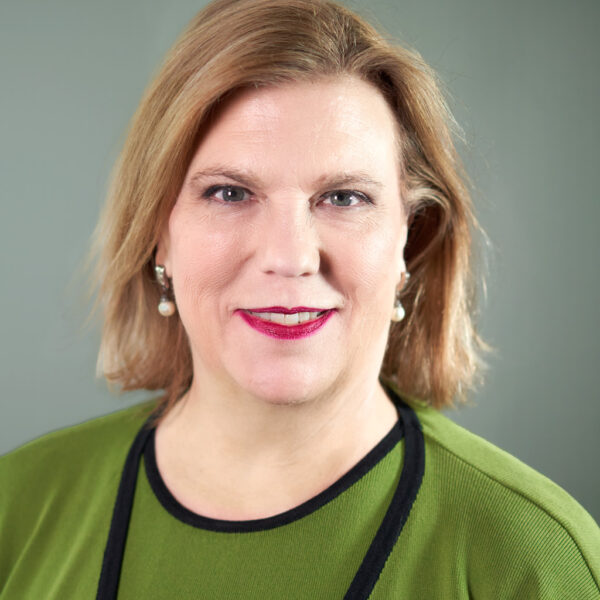
Dr. Amanda Sparks-Bushnell is a Board-Certified Psychiatrist who maintains a heartfelt commitment to transformative leadership and patient well-being. Her career is marked by a passion for enhancing medical services, fostering collaboration, and ensuring the utmost care for those she serves.
Frequently asked questions about TMS in Franklin
How long does TMS treatment take?
Each session runs 20 to 40 minutes, typically 5 days a week for 4 to 6 weeks. Early-morning and end-of-day slots exist for exactly this reason.
Can I drive and work right after a session?
Yes. There’s no sedation and no downtime, so you drive yourself and head straight back to work, school, or the rest of your day.
Does insurance cover TMS in Franklin?
Several major insurers cover TMS for depression once their criteria are met, typically documentation of 2 adequate antidepressant trials plus psychotherapy. We verify your benefits and file the paperwork before you start.
Does TMS hurt?
Most people describe a tapping sensation and a clicking sound. Some notice scalp tenderness or a mild headache in the first sessions, and it usually fades within a week.
How is TMS different from antidepressants?
Medications work chemically through your whole body, which is where side effects like weight gain and fatigue come from. TMS works locally on the brain circuits involved in depression, with no systemic side effects [3].
How is TMS different from antidepressants?
TMS uses magnetic pulses and no medication at all; Spravato is an FDA-approved esketamine nasal spray taken under supervision. We offer both in the same Franklin suite, and here’s a plain-language comparison of ketamine vs Spravato vs TMS if you want the details. When we talk with you, we can help you determine which option is best for you. You can schedule a free, 15-minute inquiry call to get started.
What if TMS isn’t enough?
Then the next option is a conversation, not a referral across town: Spravato, medication adjustments, and therapy all live in the same clinic, and your care team already knows your history.
One more thing, because it matters: if you’re in crisis right now, don’t wait for an appointment. Call or text 988 to reach the Suicide & Crisis Lifeline, available 24/7. For everything else, our Care Coordinators are here Monday through Friday, 7am to 6pm.
Contact us today
Visit Us
Address
341 Cool Springs Boulevard
Suite 140
Franklin, TN 37067
Phone: (615) 320-1155
Fax: (615) 320-1177
Hours
M-F 7:00am – 6:00pm
Languages
English, Español
[1] Psychiatric News, FDA Approves New Option to Treat Major Depression (Nov. 2008): https://psychiatryonline.org/doi/10.1176/pn.43.22.0002
[2] Carpenter, L. L., et al., Transcranial Magnetic Stimulation (TMS) for Major Depression: A Multisite, Naturalistic, Observational Study of Acute Treatment Outcomes in Clinical Practice, Depression and Anxiety, 29(7): 587-596 (Jul. 2012): https://onlinelibrary.wiley.com/doi/10.1002/da.21969
[3] Mayo Clinic, Transcranial Magnetic Stimulation, including FDA approval status and risks (Apr. 2023): https://www.mayoclinic.org/tests-procedures/transcranial-magnetic-stimulation/about/pac-20384625
[4] Blumberger, D. M., et al., Effectiveness of Theta Burst Versus High-Frequency Repetitive Transcranial Magnetic Stimulation in Patients With Depression (THREE-D): A Randomised Non-Inferiority Trial, The Lancet, 391(10131): 1683-1692 (Apr. 2018): https://doi.org/10.1016/S0140-6736(18)30295-2
[5] Cole, E. J., et al., Stanford Neuromodulation Therapy (SNT): A Double-Blind Randomized Controlled Trial, American Journal of Psychiatry, 179(2): 132-141 (Feb. 2022): https://doi.org/10.1176/appi.ajp.2021.20101429
[i] Based on 82 patients treated with TMS in the last 3 years receiving a minimum of 30 treatments and having at least 3 PHQ-9 scores during treatment.