


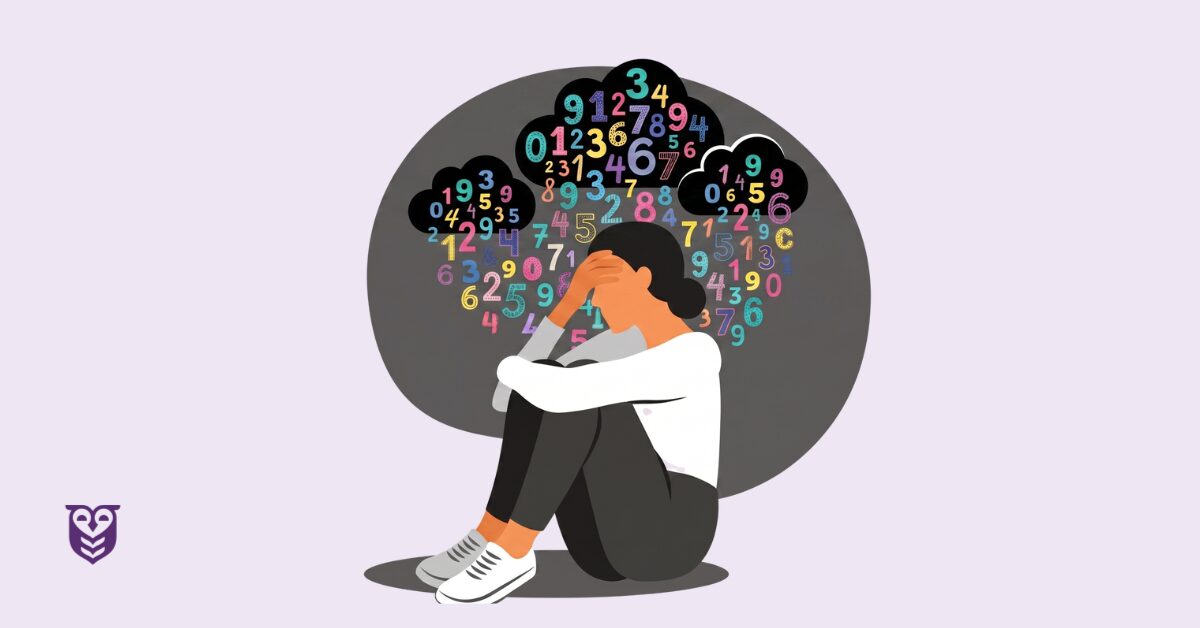
Obsessive-compulsive disorder is exhausting. The intrusive thoughts that won’t quiet down, the rituals that steal hours from your day, the constant negotiation with your own mind — it wears people out.
For many, therapy and medication provide real relief. But for a significant number of people with OCD, those first-line treatments fall short. If that sounds familiar, there’s a treatment worth knowing about: Transcranial Magnetic Stimulation, or TMS. Athena Care psychiatrist, Dr. Justin Lapollo shares more about how TMS can be a very effective treatment for OCD.
What Is TMS?
TMS is a non-invasive procedure that uses targeted magnetic pulses to stimulate specific areas of the brain involved in OCD. It doesn’t require surgery, anesthesia, or medication entering your bloodstream. The FDA approved TMS for OCD treatment in 2018, and the research supporting its effectiveness has only grown stronger since.
Here’s the core idea: OCD isn’t just a psychological habit — it’s a brain circuit problem. Research consistently shows that people with OCD have overactive neural pathways connecting the prefrontal cortex, striatum, and thalamus. These circuits get “stuck,” driving the cycle of obsessions and compulsions. TMS targets those circuits directly, delivering magnetic pulses that help recalibrate the brain’s activity patterns.
Dr. Lapollo explains it this way, “TMS works by gently stimulating specific brain regions involved in OCD, helping the brain shift out of rigid, repetitive thought patterns. This helps reduce symptom severity and improves cognitive flexibility.”
Signs That TMS May Be Right for You
TMS is particularly well-suited for people who haven’t found adequate relief from standard treatments. You might be a strong candidate if:
- Your symptoms are still moderate to severe despite treatment. If OCD continues to significantly disrupt your work, relationships, or daily functioning even after a sustained effort with therapy or medication, that’s a clear signal to explore other options.
- Medication hasn’t worked well enough — or at all. Studies show that 40–60% of OCD patients don’t respond adequately to first-line treatments like SSRIs and cognitive behavioral therapy (CBT).
- You’ve tried ERP therapy without sufficient results. Exposure and Response Prevention (ERP) is the gold-standard psychotherapy for OCD, but it doesn’t work for everyone. TMS is designed to work alongside — not replace — these approaches.
- Medication side effects are a barrier. Some people struggle with the side effects of psychiatric medications. TMS offers a path forward that doesn’t involve anything entering the bloodstream.

What Does a TMS Session Actually Look Like?
Many people are understandably curious — and cautious — about what TMS involves. The experience is far more straightforward than most expect.
“Many of my patients are concerned when discussing the possibility of starting TMS treatment,” says Dr. Lapollo. “They instantly have visions of the Electroconvulsive Therapy scene from One Flew Over the Cuckoo’s Nest,” he says, noting that a lot of people don’t know that TMS actually looks like. “In reality, TMS is arguably the most powerful and safest medical treatment in the world for treatment-resistant OCD.”
You sit in a comfortable chair, fully awake and alert. Before the stimulation begins, a clinician guides you through a short, personalized process where your OCD symptoms are gently triggered. This might involve briefly thinking about or describing a situation that activates your OCD. This step is intentional: activating the relevant brain circuit right before stimulation makes the treatment more effective. You’re always in control, and you never have to share more than you’re comfortable with.
Then the device — a cushioned helmet or coil — is placed against your head. You’ll hear clicking sounds (earplugs are provided) and will feel a rhythmic tapping sensation on your scalp. Most people describe the sensation as unusual but not painful. The actual stimulation portion takes about 18–20 minutes. Mild side effects like scalp tingling or a light headache are possible, but they typically fade within an hour or two.
One of TMS’s practical advantages is that it fits into a normal life. You drive yourself to appointments, you’re fully alert throughout, and you can go straight back to work or daily activities afterward.
How Long Is Treatment, and What Can You Expect?
A standard course of TMS for OCD involves sessions five days a week over four to six weeks — roughly 29 to 36 sessions total.
Across clinical studies, roughly 38–58% of treatment-resistant patients see significant symptom reduction. And 32% of patients with treatment-resistant OCD refractory to prior psychotherapy and medication achieve a complete response after treatment.
Perhaps most importantly, the benefits tend to last. A multi-center follow-up study found that among patients who responded to TMS, 86.7% maintained their improvement for at least one year. The average durability of response was approximately two years — a meaningful window of relief for people who have often struggled for decades.
Dr. Lapollo shares more, “For many patients with OCD, TMS provides benefits that persist well beyond the acute treatment course, with improvements often lasting months to years, especially when combined with ERP therapy and ongoing symptom management.”
The Bottom Line
TMS won’t be the right fit for everyone, and it’s not a cure. But for the millions of people with OCD who have tried medication and therapy without getting their life back, it represents a real, evidence-backed path forward. If your OCD remains moderate to severe despite your best efforts with standard treatments, it’s worth considering TMS. The brain circuits driving your symptoms can be targeted, and for many people, that makes an enormous difference.
Athena Care offers TMS for OCD in Clarksville, TN and Nashville, TN, providing a comfortable, caring space for you to heal. You don’t have to navigate these mental health challenges alone. If any of the above resonated with you, reach out to Athena Care to understand learn how TMS therapy can help you. You can contact us by filling out the short form below or by emailing us at [email protected] or calling us at 615-861-1000.
Contact us today
If you or someone you love would benefit from talking to a mental health provider in Tennessee, call or text:
877-641-1155
One of our Care Coordinators will help you get the care you need.
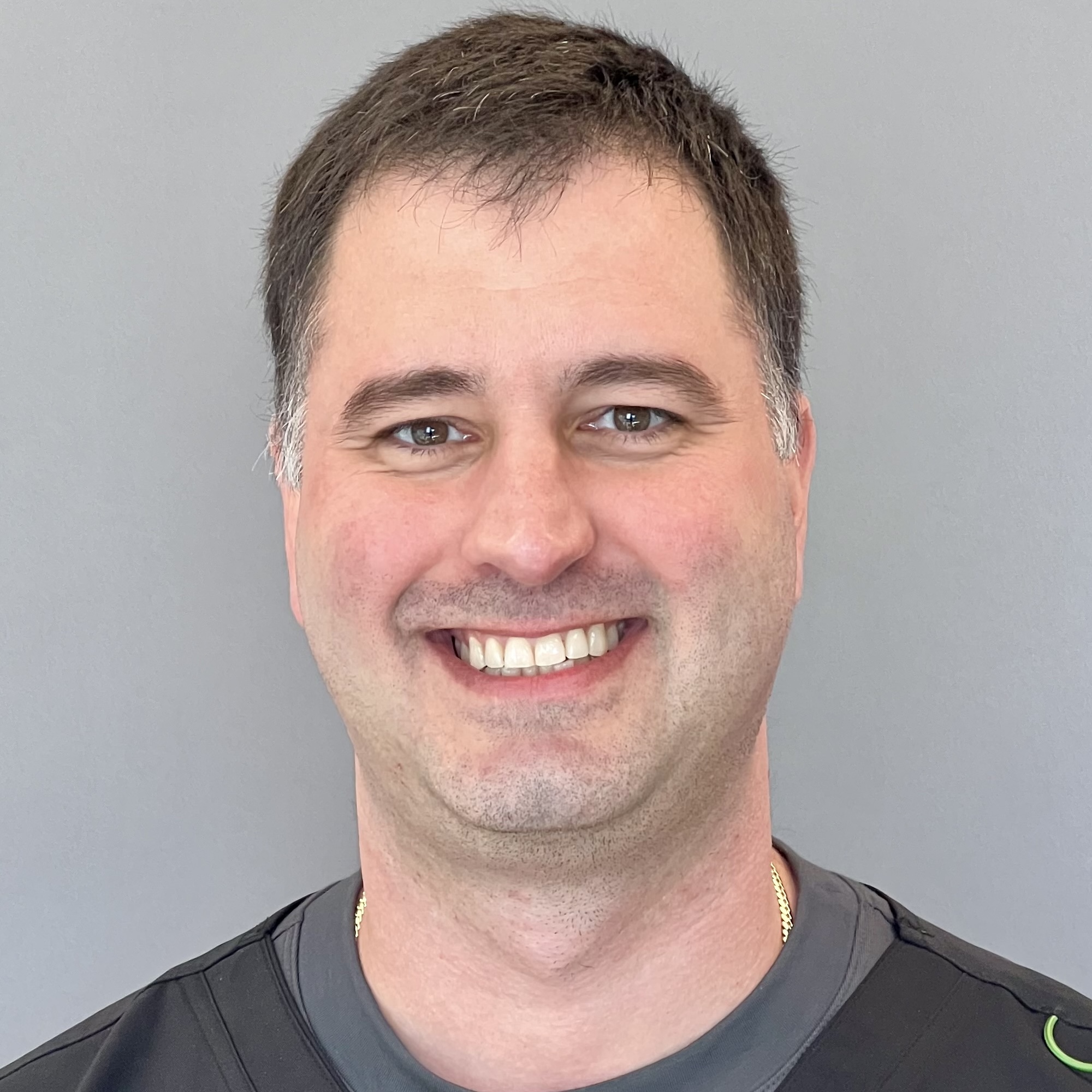
Justin Lapollo, DO
Psychiatrist
Dr. Lapollo specializes in offering full spectrum outpatient psychiatric treatment including psychiatric medication management, individual psychodynamic psychotherapy, Transcranial Magnetic Stimulation (TMS) mapping/treatment, and Ketamine treatment.

Meg Stein, CFP
Editor
Meg is a certified mindfulness instructor and works at Alive and Aware Practice in Durham, NC. She has over ten years of experience as a content creator and marketing consultant, working in mental healthcare and social justice.
Sources:
Bodapati, N. V. S. B. (2025). Transcranial magnetic stimulation in obsessive-compulsive disorder and adolescent depression: A systematic review of efficacy, safety, and predictors of treatment response. Cureus, 17(9), e92496. https://doi.org/10.7759/cureus.92496
Dehghani-Arani, F., Kazemi, R., Hallajian, A.-H., Sima, S., Boutimaz, S., Hedayati, S., Koushamoghadam, S., Safarifard, R., & Salehinejad, M. A. (2024). Metaanalysis of repetitive transcranial magnetic stimulation (rTMS) efficacy for OCD treatment: The impact of stimulation parameters, symptom subtype and rTMS-induced electrical field. Journal of Clinical Medicine, 13(18), 5358. https://doi.org/10.3390/jcm13185358
International OCD Foundation. (2024). Transcranial magnetic stimulation (TMS) for OCD. https://iocdf.org/about-ocd/treatment/tms/
Li, J., Zhang, Y., & [et al.]. (2024). Deep transcranial magnetic stimulation for treatment-resistant obsessive-compulsive disorder: A meta-analysis of randomized-controlled trials. Journal of Psychiatric Research, 171, 349–356. https://doi.org/10.1016/j.jpsychires.2024.01.038
Liang, K., Li, H., Bu, J., & [et al.]. (2024). Efficacy and tolerability of repetitive transcranial magnetic stimulation for the treatment of obsessive-compulsive disorder in adults: A systematic review and network meta-analysis. Expert Review of Neurotherapeutics, 24(2), 145–158. https://doi.org/10.1080/14737175.2024.2306875
Shanker, S., & [et al.]. (2025). Patterns, predictors, and effectiveness of TMS for treatment-resistant OCD: A naturalistic study. Transcranial Magnetic Stimulation, 2, 100096. https://doi.org/10.1016/j.transm.2025.100096