


If you’re asking this question, that alone is worth taking seriously — and the encouraging news is that ADHD is one of the most well-studied and highly treatable mental health conditions once it’s identified.
If you’ve ever wondered whether your trouble focusing, chronic lateness, or restless mind is “just how you are” or something more, you’re far from alone. An estimated 15.5 million U.S. adults — about 6% — currently have an ADHD diagnosis, and more than half of them were diagnosed as adults, not children.
Athena Care therapist Rachel Gladys, LPC-MHSP, RPT™ shares more about what signs to look for, along with next steps.
Jump to quiz
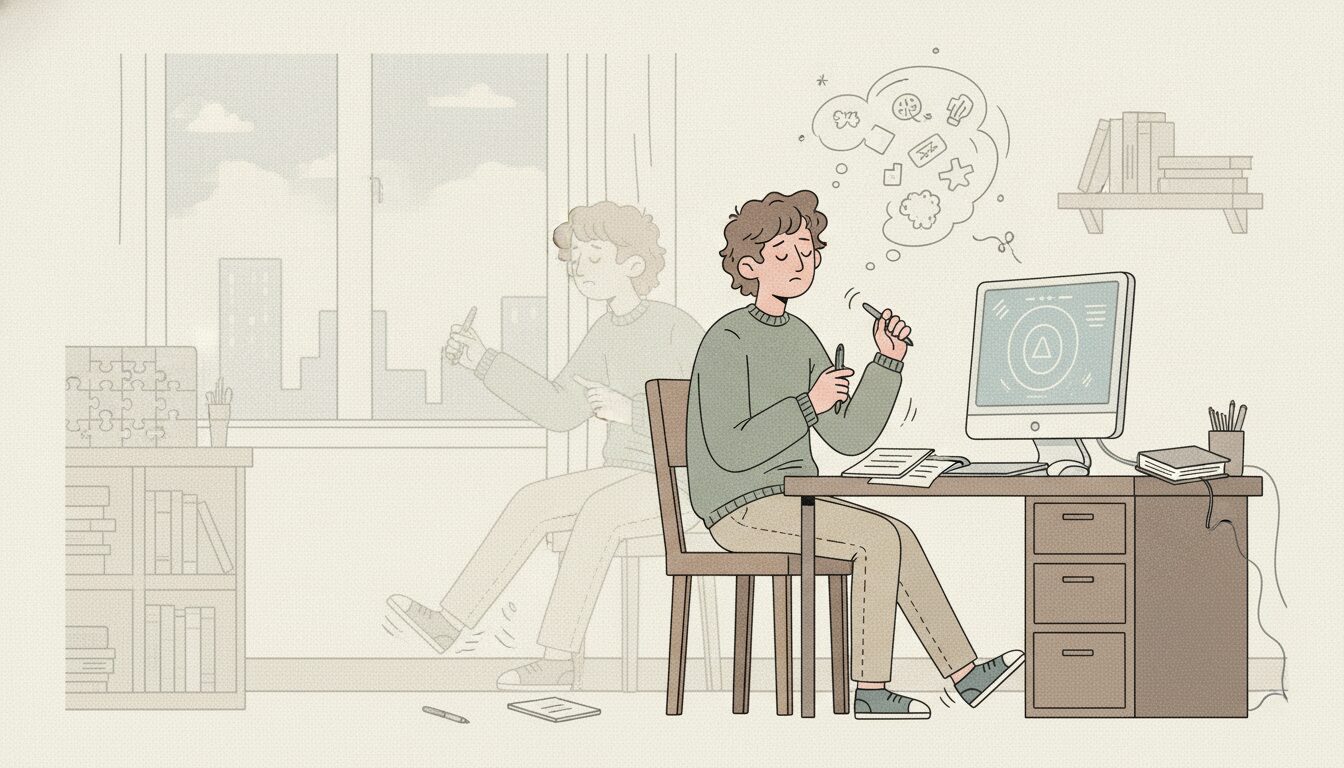
What ADHD Can Look Like
“One of the biggest misconceptions about ADHD is that people who have it simply aren’t trying hard enough,” says Rachel. “In reality, many individuals with undiagnosed ADHD are working incredibly hard just to keep up with everyday demands. Receiving an accurate diagnosis and appropriate treatment can be life-changing. It can provide clarity, reduce self-blame, and open the door to effective support.”
ADHD isn’t just “can’t sit still.” It shows up as a cluster of patterns involving attention, impulse control, and self-regulation that have been present since childhood (even if they went unnoticed) and now interfere with daily functioning.
ADHD affects executive functioning—the brain processes responsible for planning, organizing, prioritizing, managing time, regulating emotions, and following through on tasks. Some people also experience periods of “hyperfocus,” becoming so absorbed in an activity they lose track of time or have difficulty shifting attention.
“People with ADHD don’t typically struggle with knowing what to do,” offers Rachel. “The breakdown comes with consistently doing the things they know they need to do, especially when those tasks require planning, organizing, prioritizing, initiating, sustaining, or shifting attention. It’s so important that we change the narrative around ADHD. These are executive functioning challenges—not a lack of willpower, motivation, intelligence, or effort.”
Common signs of ADHD
- Losing track of time, missing deadlines, or repeatedly running late
- Starting tasks with enthusiasm but struggling to finish them
- Difficulty organizing belongings, paperwork, or your schedule
- Feeling mentally “elsewhere” during conversations or meetings
- Restlessness — physical fidgeting, or a mind that’s always racing
- Impulsive decisions around money, relationships, or speech
- Emotions that feel difficult to regulate or seem to escalate more quickly than intended
- A lifelong sense of underachieving relative to your effort or intelligence
- Feeling like you’re working much harder than others to achieve similar results
It Can Look Different Depending on Who You Are
In children, ADHD often presents as visible hyperactivity: fidgeting, interrupting, difficulty staying seated, or trouble following multi-step instructions.
In adults, hyperactivity often turns inward. Rather than bouncing off the walls, it becomes an internal sense of restlessness or a racing mind, while the bigger struggles shift toward time management, organization, planning, and follow-through at work or home.
By gender, research increasingly points to real differences in how ADHD shows up and gets recognized. Boys and men are more likely to display outward hyperactivity and impulsivity, which tends to get noticed and diagnosed earlier. Girls and women are more likely to have the inattentive presentation — daydreaming, disorganization, and difficulty focusing — which is quieter and easier to miss or mistake for anxiety or a personality trait.
“Many adults—especially women—tell us they’ve spent years believing they were simply anxious, lazy, disorganized, or that they just needed to try harder. Often, those beliefs aren’t coming from within—they’re messages that have been internalized after years of feedback, expectations, and misunderstandings from the world around them.” Rachels says that for many woman, l”earning they have ADHD helps reframe decades of self-criticism with greater understanding, self-compassion, and a clearer path forward.”
Men are typically rated as having more severe inattention in adulthood, while hyperactivity/impulsivity differences between sexes are less pronounced in adults than in childhood. Women are also more likely to be diagnosed later in life. One CDC analysis found 61% of women with ADHD were diagnosed in adulthood, compared with 40% of men — partly because their symptoms are more often internalized, masked through compensating strategies, or attributed to co-occurring anxiety or depression. Hormonal shifts across the menstrual cycle, pregnancy, and menopause can also intensify symptoms in ways that are only beginning to be well understood.
None of this means ADHD is fundamentally “different” depending on gender in some fixed way — it means the same underlying condition often gets filtered through different social expectations, coping styles, and clinical assumptions, which affects who gets recognized and when.
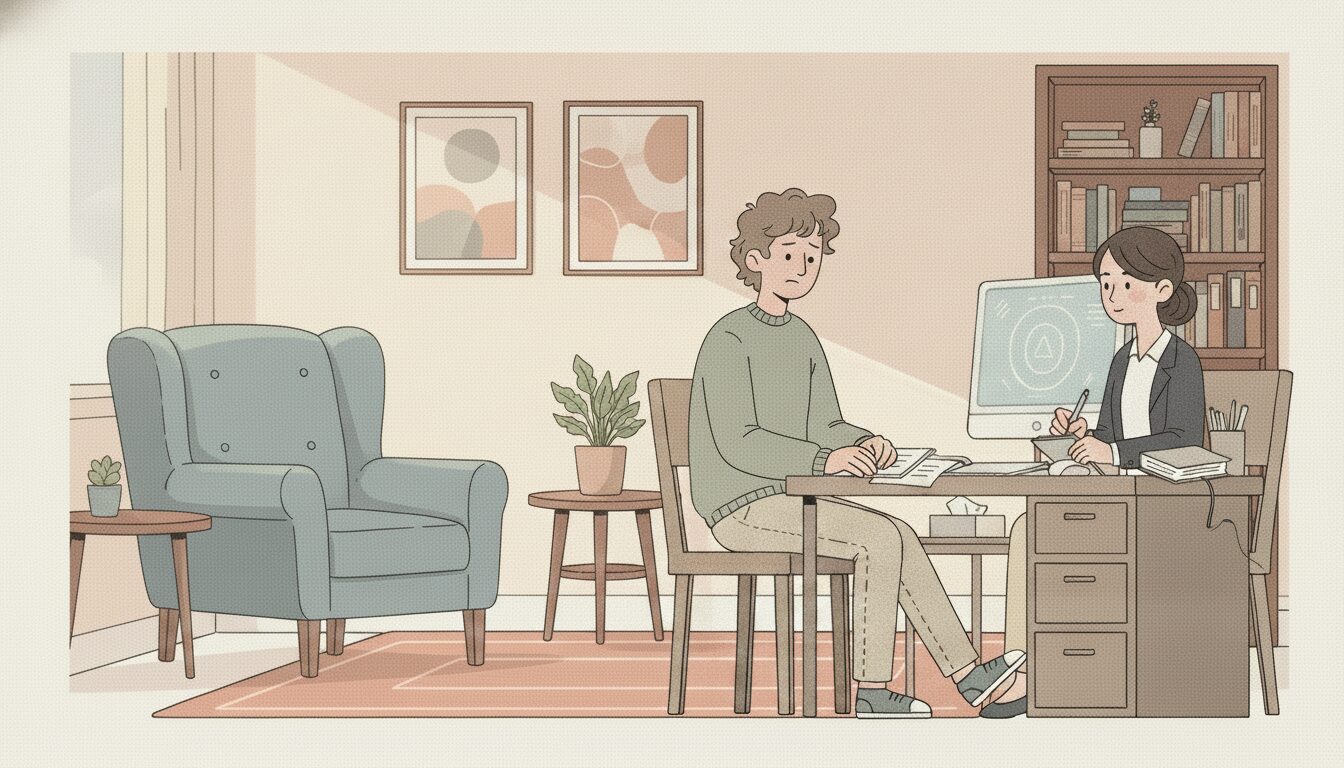
What to Do If You Think You Might Have ADHD
1. Take a validated self-screening quiz first. A great starting point is the self-assessment quiz linked at the end of this article. It won’t diagnose you, but it will help you organize your experience into language a clinician can work with.
2. Track patterns for a couple of weeks. Jot down moments when focus, time management, or impulse control tripped you up. Patterns across work, home, and relationships matter more than any single incident.
3. Consider your past. ADHD is a childhood-onset condition, so reviewing old report cards, or asking a parent or sibling what you were like as a kid, can add useful evidence — even if no one used the word “ADHD” at the time.
4. Talk to a professional. A primary care doctor, psychiatrist, or psychologist can conduct a full evaluation, ruling out overlapping conditions like anxiety, depression, or thyroid issues that can mimic ADHD symptoms.
5. Know that treatment works. Whether it’s behavioral strategies, coaching, therapy, medication, or some combination, most people see real, meaningful improvement. An ADHD diagnosis isn’t a life sentence of struggle — for many people, it’s the missing explanation that finally makes their strengths and challenges make sense, and the starting point for building systems that actually work for their brain.
6. Join a support group. Sometimes learning in a group can feel more supportive. Other participants may ask questions that you didn’t think of and sharing experience with others can be bolstering. Athena Care psychologist, Dr. Van Horn runs a monthly support group in Franklin, TN that you can join in person or online. Learn more here.
Rachel reminds us that, “an ADHD diagnosis isn’t about labeling someone’s weaknesses—it’s about understanding how their brain works so they can stop blaming themselves, recognize their strengths, and build strategies that support the way they naturally think, learn, and function.”
For many adults, receiving an ADHD diagnosis doesn’t change who they are—it gives a name to struggles they’ve been trying to explain for years and opens the door to understanding themselves with greater compassion.
It’s also okay if:
• Your child is going through a short-term adjustment (a new sibling, a school change) and is trending back to baseline.
• The behavior is developmentally normal for their age and not causing significant impairment.
When in doubt, a single consultation with a licensed child therapist can help you get clarity. You don’t have to commit to a full course of therapy to get a professional read on what’s happening.
Ready to see where you stand? Take the self-assessment quiz linked below to get a clearer picture before your next conversation with a healthcare provider.
If any of the above resonated with you or someone you love, reach out to Athena Care so we can help. You can contact us by filling out this short form or call/text us at +1 877-641-1155 or email [email protected].
ADHD Self-Assessment Quiz

Rachel Gladys, LPC-MHSP, RPT™
Therapist
Rachel is a Licensed Professional Counselor trained in diverse counseling modalities and techniques, creating the foundation for the playful, nurturing, collaborative, and integrated treatment approach she cultivates for her clients. Rachel has pursued more than 175 hours of specialized play therapy training in pursuit of Registered Play Therapist™ credentials through the Association for Play Therapy, the professional organization responsible for promoting the evidence-based and ethical practice of play therapy.

Meg Stein, CFP
Editor
Meg is a certified mindfulness instructor and works at Alive and Aware Practice in Durham, NC. She has over ten years of experience as a content creator and marketing consultant, working in mental healthcare and social justice.
Sources:
- Centers for Disease Control and Prevention (CDC), MMWR: ADHD Diagnosis, Treatment, and Telehealth Use in Adults, 2024
- Duke Department of Psychiatry & Behavioral Sciences, ADHD in Girls and Women: Key Facts, 2024
- Psychological Medicine (Cambridge University Press), systematic review and meta-analysis on sex differences in ADHD symptom severity, 202
- Frontiers in Global Women’s Health, gender-based differences in ADHD symptom endorsement, 2025
- CHADD (Children and Adults with Attention-Deficit/Hyperactivity Disorder), Clinical Practice Tools, 2025
This article is for general educational purposes and is not a diagnostic tool. Only a qualified healthcare provider can diagnose ADHD. If you’re struggling with focus, organization, or impulsivity in ways that affect your daily life, please reach out to a licensed professional.