

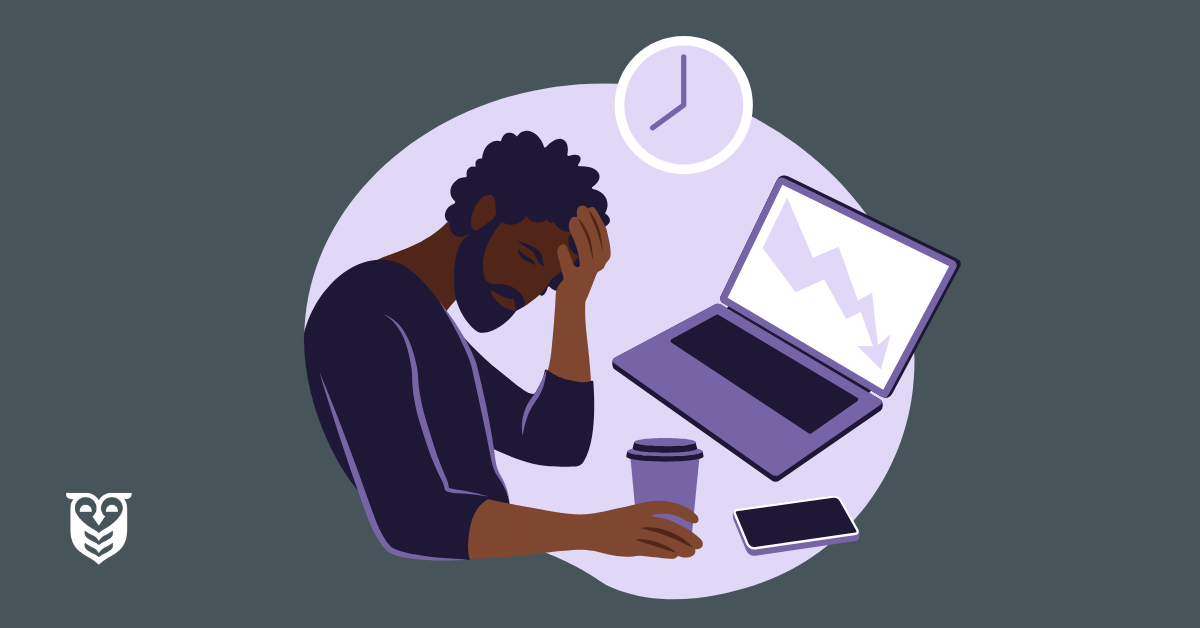
You’re exhausted, but rest doesn’t help. You dread things you used to enjoy. You go through the motions at work — or at home — feeling like you’re running on empty. You might be burned out.
Burnout isn’t just stress. It’s what happens when stress goes unmanaged for too long. And it’s far more common than most people realize. A 2025 Forbes study found that 66% of employees have experienced some degree of burnout. If this sounds familiar, you’re in good company — and more importantly, you can get better.
Athena Care therapist, Extasy Grinn says that, “Burnout is not weakness. It is your body and mind telling you that you need to take care of yourself.”
What burnout actually is
“Burnout can come from many different places, including work or even a diagnosis. It comes from too much stimulation for too long of a period of time,” shares Extasy.
The World Health Organization officially classifies burnout as an occupational syndrome — not just a bad mood or a rough patch. The WHO defines burnout as an occupational phenomenon resulting from chronic workplace stress that hasn’t been successfully managed, showing up in three specific ways: feelings of energy depletion or exhaustion, increased mental distance from your job, and reduced professional effectiveness.
It’s also worth knowing that burnout and stress are not the same thing. Stress results from too much mental and physical pressure, while burnout is about too little — too little emotion, motivation, or care. Stress can make you feel overwhelmed, but burnout makes you feel depleted and used up. That distinction matters, because what helps one doesn’t always help the other.
The signs to watch for
Burnout rarely arrives all at once. It builds gradually, which is exactly why it’s easy to miss. Research published in Frontiers in Public Health in 2025 identified a three-category framework for recognizing early burnout, and the signs span your inner world, your body, and your relationships. Intrapersonal indicators include persistent fatigue, impaired concentration, poor sleep quality, and physical complaints, while interpersonal indicators show up as irritability, reduced empathy, and growing expressions of dissatisfaction.
Here’s what that looks like in real life:
Exhaustion that sleep doesn’t fix. You wake up already tired. You get through the day, but nothing replenishes you. This is one of the earliest and most consistent warning signs.
Cynicism and detachment. Work that once felt meaningful now feels pointless. You find yourself going through the motions and caring less and less. Research from Wellhub’s 2025 State of Work-Life Wellness report found that 44% of U.S. employees feel “emotionally drained” and 51% feel “used up” at the end of each workday.
Declining performance. You’re not lazy — you’re depleted. Burnout impairs concentration and makes even routine tasks feel monumental. The physical and psychological effects of burnout include cardiovascular disease, musculoskeletal pain, sleeping problems, and depression — a reminder that this isn’t just a mental state, it’s a whole-body condition.
Pulling away from people. Burnout tends to make us withdraw — from friends, from family, from the activities that once recharged us. If you’ve been isolating and can’t quite explain why, burnout may be the answer.
Feeling like nothing you do matters. This sense of ineffectiveness — the feeling that your efforts don’t add up to anything — is one of burnout’s most painful dimensions, and one of its most telling signs.
What to do about it
Here’s the good news: burnout is recoverable. It takes time and intention, but people come back from it all the time.
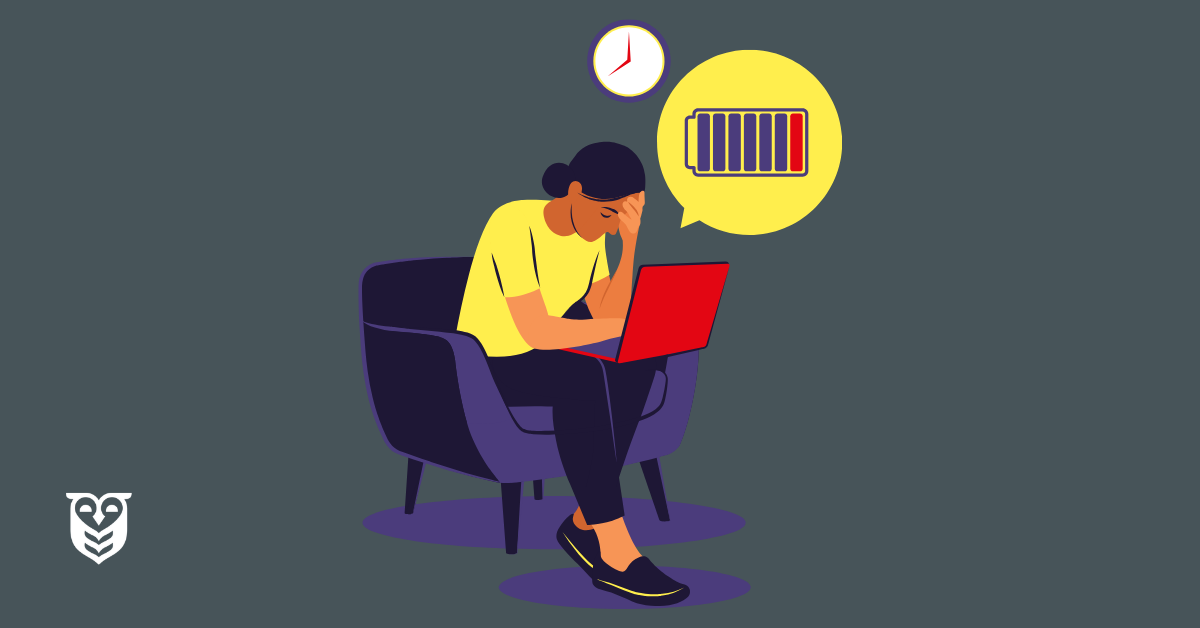
Start by naming it. If you recognize the symptoms of burnout — feeling mentally, emotionally, and physically exhausted — it’s critical to pause, reevaluate your priorities, and make changes in your life.
Extasy reminds us that, “Burnout can be difficult and that is okay. Your value is not attached to how many tasks you can complete.” Acknowledging what’s happening is the first, necessary step. You can’t solve a problem you refuse to see.
Create distance from your stressors. This doesn’t have to mean quitting your job. It might mean taking a few days off, delegating responsibilities, or simply enforcing harder boundaries around your time and energy. Overcoming burnout calls for deeper, longer-term interventions — reevaluating your workload, setting boundaries, or seeking help from a mental health professional.
Prioritize sleep and basic self-care. Sleep can be one of the first healthy habits neglected on the road to burnout, and less than six hours of sleep a night makes you 2.5 times more likely to have serious mental distress. Recovery from burnout runs through your basic biology — sleep, movement, and nourishment are not optional extras.
Extasy says that, “Sometimes people tell me they feel like they are a failure unless they are being productive, but the truth is that sometimes not being productive is productive. When I say not being productive I mean figuring out what your self-soothing is, not doing any type of work, to help you self-care. Sometimes the most productive thing is giving someone or yourself permission to rest.”
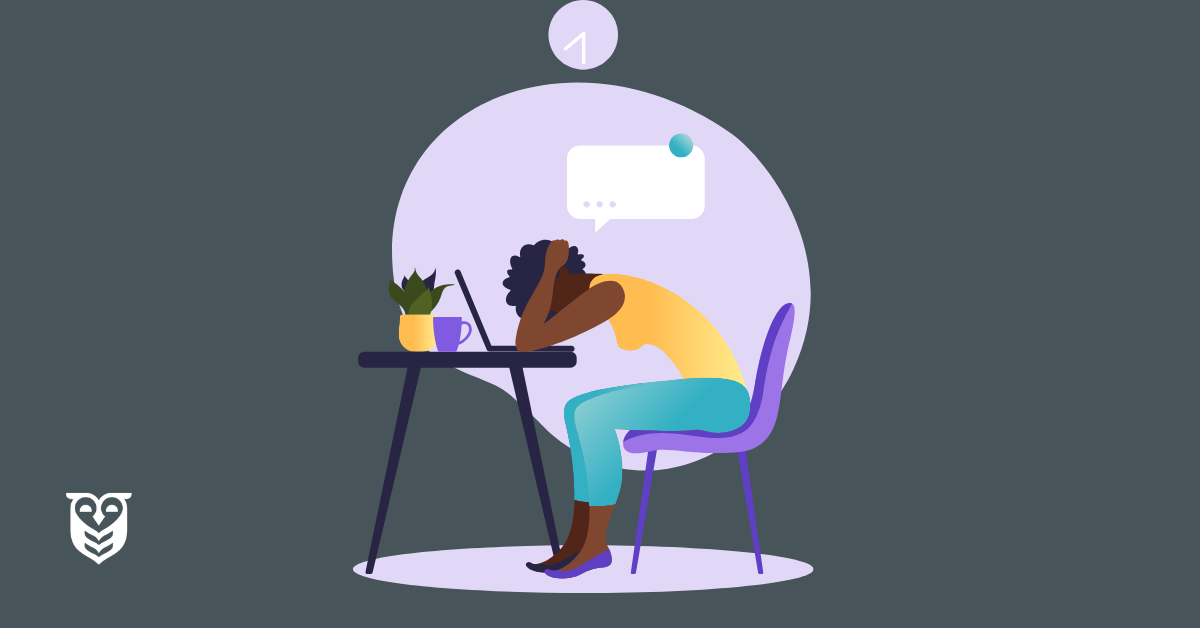
Lean on your support network. Connection is a genuine antidote. Talking to someone you trust — a friend, a family member, or a professional — helps break the isolation that burnout feeds on.
Consider talking to a therapist. Burnout recovery requires more than pushing through — it requires intentional care, and therapy for burnout provides a structured, supportive space to understand what’s driving exhaustion and how to change it sustainably. Collaborativemn A therapist can help you identify the patterns that led to burnout, build better coping skills, and create a realistic plan for recovery. This is especially worth considering if burnout is bleeding into depression, anxiety, or your relationships outside of work.
You don’t have to earn the right to feel better
Burnout is not a character flaw. It’s a signal — one that deserves to be taken seriously. The fact that you’re asking questions about what you’re experiencing is already a step in the right direction.
Recovery is possible. With the right support, most people do get better. You can too.
If you or someone you love is would benefit from mental healthcare support, we are here to help. You can contact Athena Care’s clinics (open Monday–Friday, 7am–6pm) to learn more. Remember, help is available; you and your family don’t have to face mental health challenges alone.
To learn more about different options for mental healthcare, you fill out this short contact form, or call/text us at +1 877-641-1155 or email [email protected].
Free, confidential well-being quiz
If you or someone you love would benefit from talking to a mental health provider in Tennessee, call or text:
877-641-1155
One of our Care Coordinators will help you get the care you need.
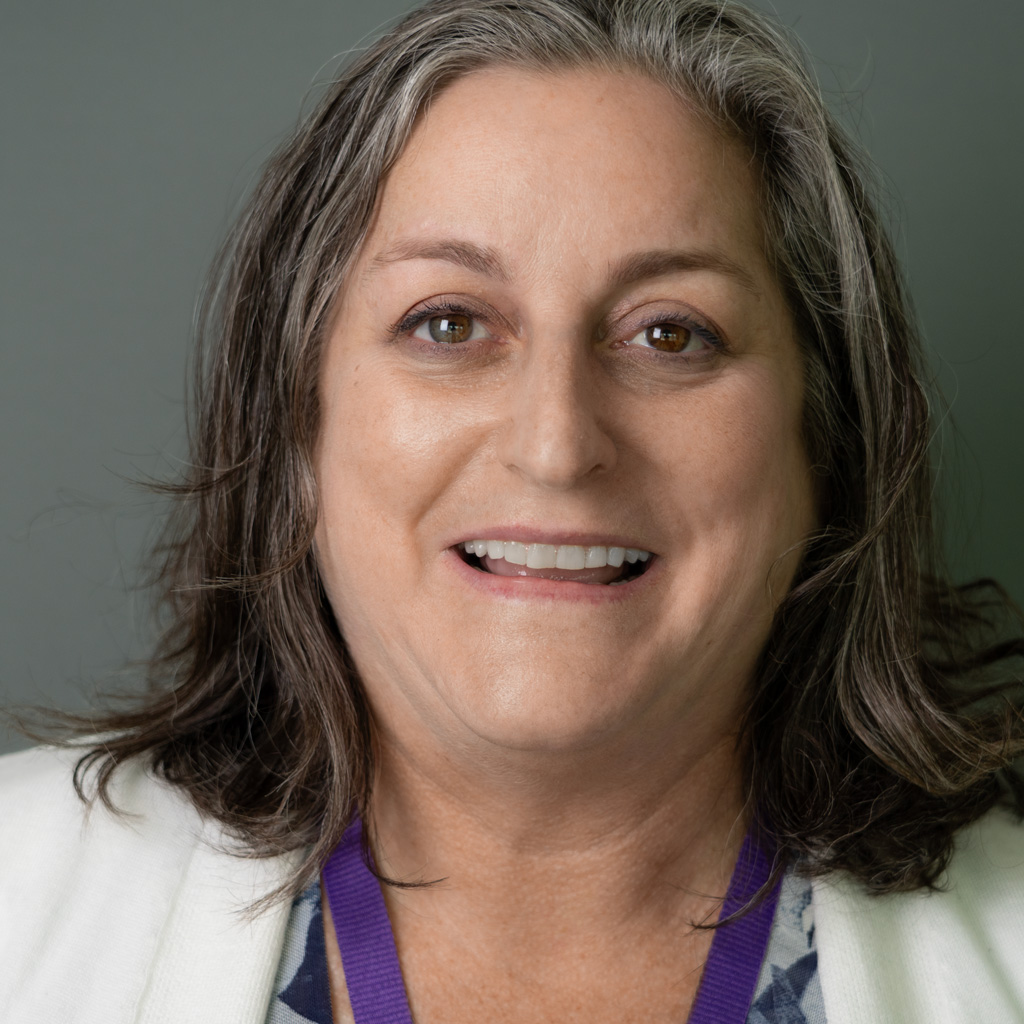
Extasy Grinn, LCSW
Therapist
Extasy is a Licensed Clinical Social Worker and provides individual therapy to adults. She has training and expertise in a variety of mental and behavioral health areas, including addiction treatment, geriatric care, child therapy and individual therapy with adults.

Meg Stein, CFP
Editor
Meg is a certified mindfulness instructor and works at Alive and Aware Practice in Durham, NC. She has over ten years of experience as a content creator and marketing consultant, working in mental healthcare and social justice.
Sources:
Robinson, B. (2025, February 8). Job burnout at 66% in 2025, new study shows. Forbes. https://www.forbes.com/sites/bryanrobinson/2025/02/08/job-burnout-at-66-in-2025-new-study-shows/
University of Phoenix. (2026). Workplace burnout: Sources, symptoms, and steps. https://www.phoenix.edu/research/news/2026/workplace-burnout-sources-symptoms-and-steps.html
Wellhub. (2025, November 13). Employee burnout in the US: Symptoms, impact, prevention, stats. https://wellhub.com/en-us/blog/wellness-and-benefits-programs/burnout/
Zeng, W., Xu, J., Yu, J., & Chu, X. (2025). Seeing burnout coming: Early signs and recognition strategies in health professionals. Frontiers in Public Health, 13. https://www.frontiersin.org/journals/public-health/articles/10.3389/fpubh.2025.1721220/full
Norwegian University of Science and Technology. (2024, February 15). Burnout: Identifying people at risk. ScienceDaily. https://www.sciencedaily.com/releases/2024/02/240215113602.htm
Smith, M., & Reid, S. (2026, February 12). Burnout: Symptoms, treatment, and coping strategy tips. HelpGuide. https://www.helpguide.org/mental-health/stress/burnout-prevention-and-recovery
WebMD. (2026, February 3). Burnout: Symptoms, risk factors, prevention, treatment. https://www.webmd.com/mental-health/burnout-symptoms-signs
Collaborative Counseling. (2026, March 3). How therapy can help you break the cycle of burnout in 2026. https://www.collaborativemn.com/blog/2026/03/03/how-therapy-can-help-you-break-the-cycle-of-burnout-in-2026/
Guardian Life. (2026, January 29). How to recover from burnout: Strategies to try and seeking help. https://www.guardianlife.com/mind-body-wallet/how-to-recover-from-burnout