


The numbers are hard to ignore. In the United States, men account for nearly 80% of all suicides, yet only 17% saw a mental health professional in 2024 — compared to more than 28% of women. That gap isn’t explained by men being healthier. It’s explained by men staying silent.
This isn’t a personal failing. It’s the predictable result of cultural conditioning that has been building for generations. And once you understand why it happens, you can start to change it.
Athena Care therapist, JaMichael Carroll, LFMTt notes the generational impact on young men: “It would be helpful to create opportunities when a male child is young by helping him to learn to healthily express his emotions. This happens when he sees his father and/or other supportive male figures in his life show healthy versions of expressing their emotions.” Below, JaMichael shares more, including reasons men don’t ask for help, what anxiety looks like for men and practical tips.
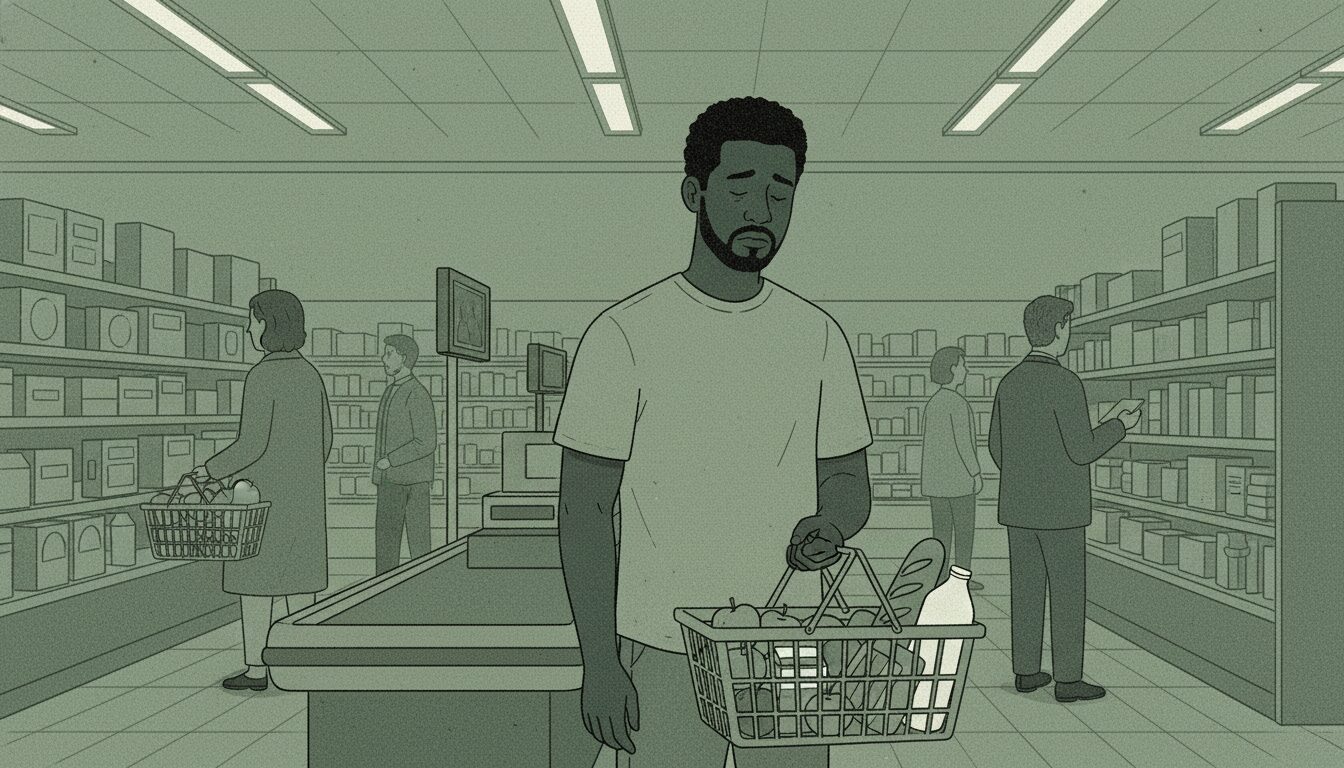
The Real Reason Men Don’t Ask for Help
The short answer: they’ve been taught not to.
There are three consistent barriers — societal stigma, fear of judgment, and a lack of the emotional vocabulary to ask for support. From boyhood, many men absorb the message that emotional pain is something to endure quietly, not discuss openly. Asking for help signals weakness. Staying silent signals strength. Neither is true, but the belief runs deep.
Across dozens of studies, the most recurring theme was men’s fear of being seen as less masculine if they sought mental health care. This fear isn’t abstract — it shapes real behavior. Men dismiss symptoms as stress. They white-knuckle it through anxiety and depression. They reach for alcohol instead of a therapist. Over time, unaddressed mental health struggles intensify and show up in harder-to-ignore ways: broken relationships, lost jobs, physical illness, and in the most serious cases, suicide.
Isolation compounds the problem. One in four men between the ages of 15 and 34 reported feeling lonely “a lot of the day” — a rate significantly higher than women the same age and higher than young men in nearly 40 other wealthy nations. A separate survey found that 15% of men report having no close friends at all, up from just 3% in 1990. Men who lack social connection have fewer people to notice when something is wrong and fewer outlets for processing difficult emotions.
The consequences are stark. According to the CDC (2025), the suicide rate among men in 2023 was approximately 22.7 deaths per 100,000 — nearly four times the rate among women. In 2024, the American Foundation for Suicide Prevention reported 38,977 male suicide deaths compared to 9,847 among females. And critically, AAMC data shows that more than 60% of men who died by suicide had accessed mental health care in the prior year — meaning the system is also failing men who do reach out.
Here is the reframe that matters: asking for help is not weakness. It is what people who take their health seriously do when the problem exceeds what one person can solve alone.
What Anxiety Actually Looks Like in Men
Anxiety disorders are the most common mental health condition in the United States, affecting more than 3 million men through panic disorder, agoraphobia, and other phobias alone. Yet male anxiety frequently goes unrecognized — including by the men experiencing it. That’s because for many men, anxiety doesn’t show up as visible nervousness or tearfulness. It shows up in the body and in behavior.
Physical warning signs to watch for:
- Racing heart or chest tightness — palpitations that can feel indistinguishable from a cardiac event, which often sends men to the ER rather than a therapist
- Persistent muscle tension — especially in the jaw, neck, and shoulders; teeth grinding during sleep is a common indicator
- Chronic headaches and unexplained pain — back pain, tension headaches, or stomach problems that doctors can’t attribute to a physical cause
- Digestive problems — nausea, stomach upset, or irritable bowel symptoms that flare during stressful periods
- Sleep disruption — difficulty falling asleep, frequent waking, or waking exhausted after a full night’s rest
- Excessive sweating or trembling — particularly in high-pressure situations like work presentations or difficult conversations
- Shortness of breath — a persistent sense of not getting a full breath, often mistaken for a respiratory issue
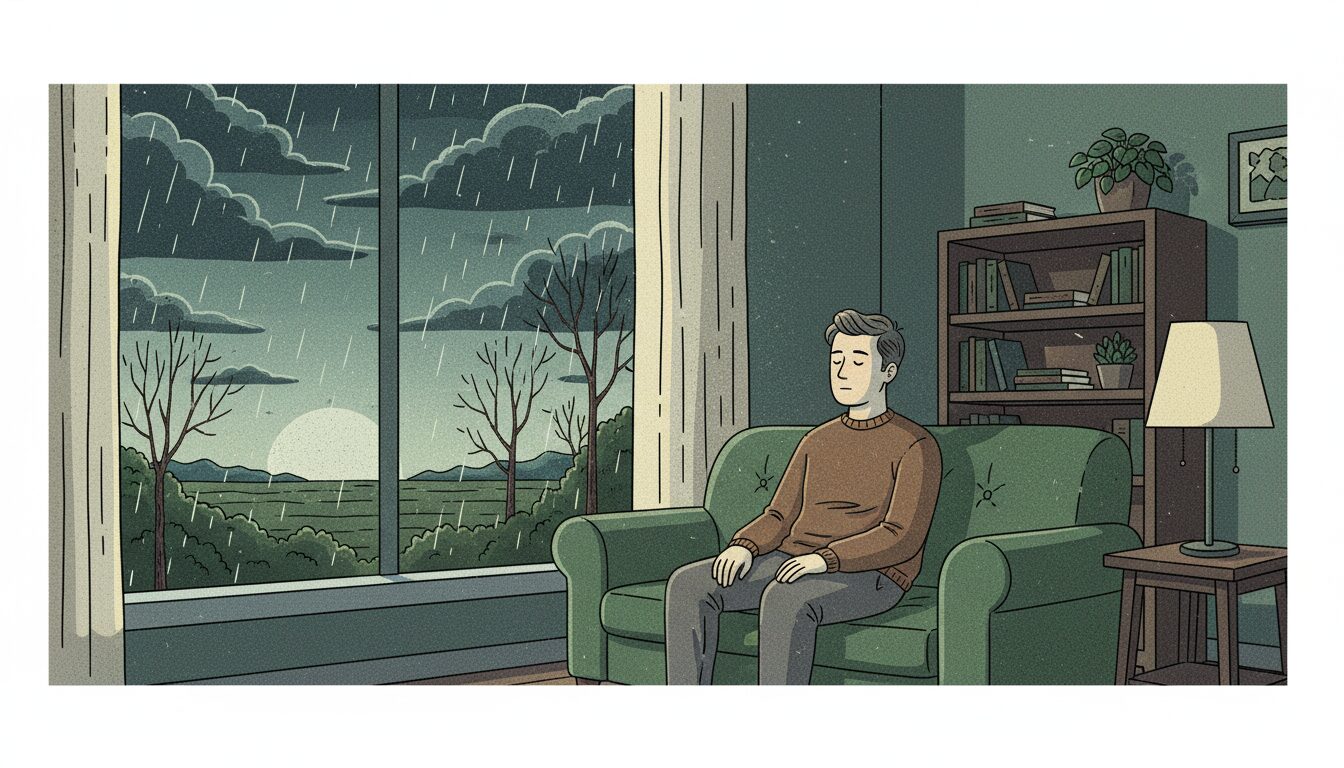
Behavioral signs that are easy to miss:
- Irritability or anger that feels disproportionate to the situation
- Restlessness — pacing, fidgeting, an inability to sit still
- Avoidance — skipping social events, procrastinating on decisions, withdrawing from people
- Regular use of alcohol to “take the edge off”
- Worst-case thinking — catastrophizing, mentally rehearsing disasters, difficulty letting things go
If several of these signs sound familiar, pay attention. The body is often the first place anxiety speaks, long before the mind is ready to listen. Men are also more likely than women to present with irritability and anger rather than sadness or worry — which means both men themselves and their doctors can miss what’s actually happening.
Five Things You Can Do Right Now
You don’t need to overhaul your life to start feeling better. Small, consistent actions move the needle.
1. Move your body. Exercise is one of the most well-evidenced anxiety and depression reducers available — no prescription required. A 20-minute walk, a run, or a gym session releases endorphins that reduce the physical tension anxiety creates. Start where you are. If a short walk is all you can manage, start there and build from it.
2. Practice box breathing. When anxiety spikes, your body’s stress response takes over your nervous system. You can interrupt it. Breathe in for four counts, hold for four, breathe out for four, hold for four. Repeat for a few minutes. This directly activates the parasympathetic nervous system and reduces the physical intensity of an anxiety response. It works, and it requires nothing but a few minutes and a quiet space.
3. Cut back on caffeine and alcohol. Both make anxiety worse. Caffeine raises your heart rate and heightens the sensation of being on edge. Alcohol may feel like it numbs anxiety in the short term, but it elevates anxiety levels for hours afterward and, over time, creates physical dependency. Men who regularly use alcohol to manage anxiety are significantly more likely to develop substance use disorders.
4. Name what you’re feeling. “Far too often the fear of judgement or idea of being de-masculinized will keep a hurt man from expressing his feelings,” says JaMichael. But research consistently shows how important this expression is and that actually labeling an emotion reduces its intensity.
You don’t need to tell anyone. Start a notes app or buy a cheap notebook. Write down what you’re experiencing and when it happens. Patterns will emerge — and so will a sense of agency over something that may have felt out of control.
5. Have one honest conversation. “One way to provide healthier gateways for men to open up is to create safer spaces for them in the home and with their friend groups,” says JaMichael, “especially with other male counterparts.”
You don’t have to open up to everyone. You need one person who won’t judge you — a friend, a partner, a primary care doctor. The goal isn’t to solve anything in one conversation. It’s to say: “I haven’t been feeling great.” That sentence is harder than it sounds and more important than most men realize.
When to Seek Professional Help
If anxiety is affecting your sleep, your relationships, your work, or you’re using substances to cope, it’s time to talk to a professional. Cognitive Behavioral Therapy (CBT) is the most well-evidenced treatment for anxiety disorders and tends to be particularly effective for men because it’s practical and skills-based — it focuses on identifying thought patterns and changing behavior, not exploring feelings in the abstract. Many men find it far more accessible than they expected once they get in the door.
You can ask your primary care physician for a referral, search the NIMH’s provider directory at nimh.nih.gov, or contact the 988 Suicide & Crisis Lifeline by calling or texting 988 if you’re in crisis. The first session is just a conversation. Nothing is decided in one hour.
A Note on Progress
The stigma around men’s mental health in the United States is real — but it is shifting. More men are seeking support than a decade ago. Conversations once unthinkable in locker rooms and at the workplace are beginning to happen. The 988 Lifeline, launched nationwide in 2022, received more than 19 million calls, texts, and chats through October 2025 — a sign that more Americans, including men, are reaching out when they need it.
That change starts with each man who decides his mental health is worth the discomfort of honesty.
You don’t have to be in crisis to deserve support. You just have to be human.
If any of the above resonated with you or someone you love, reach out to Athena Care so we can help. You can contact us by filling out this short form or call/text us at +1 877-641-1155 or email [email protected].
Contact us today
JaMichael Carroll, LMFT
Therapist and Group Facilitator
JaMichael specializes in working with adolescents and adults that have struggles with Trauma, anxiety, depression, substance use, and post-traumatic stress disorder (PTSD). JaMichael utilizes a variety of therapeutic modalities in his practice, including Dialectical Behavioral Therapy (DBT), Solution-Focused Therapy, Cognitive Behavioral Therapy (CBT) and Child-Centered Play Therapy. His overall goal as a mental health professional is to provide his clients with a safe and welcoming environment to uncover long-term solutions and promote a better overall health approach to overcome any struggles.

Meg Stein, CFP
Editor
Meg is a certified mindfulness instructor and works at Alive and Aware Practice in Durham, NC. She has over ten years of experience as a content creator and marketing consultant, working in mental healthcare and social justice.
Sources:
SAMHSA. (2025). Key substance use and mental health indicators in the United States: Results from the 2024 National Survey on Drug Use and Health. U.S. Department of Health and Human Services. https://www.samhsa.gov/data
Griffith, D.M., et al. (2024). Men and mental health: What are we missing? Association of American Medical Colleges (AAMC). https://www.aamc.org/news/men-and-mental-health-what-are-we-missing
Mokhwelepa, L.W., et al. (2025). Men’s mental health matters: The impact of traditional masculinity norms on men’s willingness to seek mental health support — a systematic review. PMC/National Institutes of Health. https://pmc.ncbi.nlm.nih.gov/articles/PMC12117241/
Centers for Disease Control and Prevention (CDC). (2025). Suicide data and statistics. https://www.cdc.gov/suicide/facts/data.html
American Foundation for Suicide Prevention (AFSP). (2026). Suicide statistics. https://afsp.org/suicide-statistics/
Anxiety and Depression Association of America (ADAA). (2024). Understanding men’s mental health: From awareness to action. https://adaa.org/find-help/by-demographics/mens-mental-health
HeadsUpGuys. (2025). Managing anxiety: Practical tips for men. https://headsupguys.org/managing-anxiety-practical-tips-men/
Gallup. (2025). Loneliness among young men in the United States. healthforlifegr.com/mens-mental-health/