


Coming out is one of the most personal, courageous acts a person can undertake. Whether someone is disclosing their sexual orientation, gender identity, or both — to themselves first, and then to the people around them — it is a profound step toward living authentically.
It is also, for many, a step that comes with real emotional weight. That’s where therapy can make a meaningful difference — not because coming out is a problem that needs fixing, but because every person deserves skilled, affirming support as they navigate one of life’s most significant transitions.
Athena Care therapist, Carmen Elkins, LPC-MHSP shares more, “Coming out is a way to honor one’s self and choosing if, when, and how are all ways individuals honor themselves in their own coming out experiences. There is no one way to come out, there is no one age to come out. Coming out may feel scary, even to people we know affirm and support us, because it feels disruptive to the nervous system regardless. Having an affirming therapist to assist in navigating that nervous system disruption can be invaluable.”
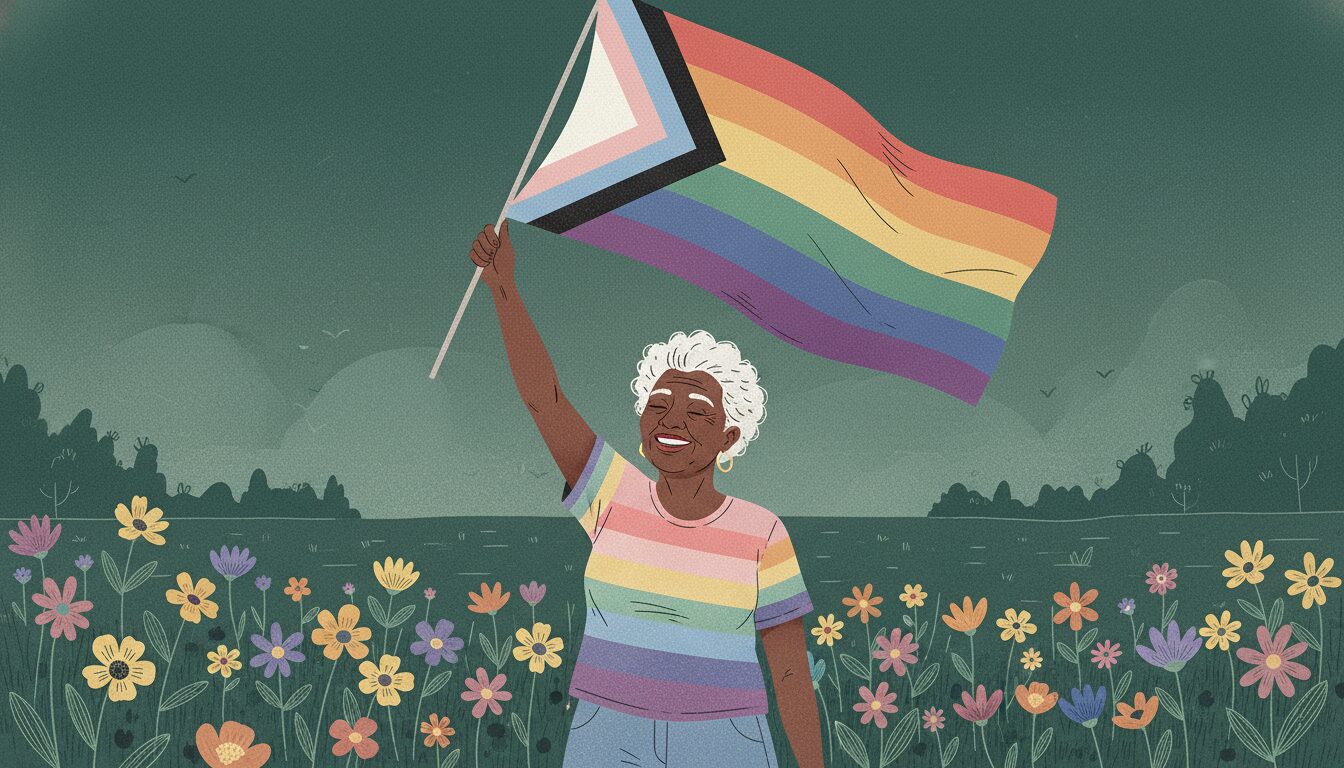
Why People Come Out
People come out for a variety of deeply personal reasons: the need to stop hiding, the desire to be known fully by the people they love, the relief of no longer carrying a secret, and the hope of finding community with others who share their experience. At its core, coming out is an act of self-respect and self-determination. It is a declaration that your identity matters and deserves to exist openly in the world.
Coming out is not a single event. It happens repeatedly — with family, friends, colleagues, healthcare providers, and strangers. And it doesn’t follow a linear timeline. Some people come out in their teens; others come out at 40 or 70. There is no wrong time, and there is no one right way to do it.
Why It Matters
Living authentically is not a luxury — it is a mental health necessity. Research consistently shows that LGBTQ+ individuals do not experience higher rates of mental health struggles because of their identity. They experience higher rates because of how society treats them. The Trevor Project’s 2024 National Survey of more than 18,000 LGBTQ+ young people found that those living in very accepting communities attempted suicide at less than half the rate of those in very unaccepting communities. The problem is stigma, rejection, and discrimination — not identity.
“Most everyone is aware of the statistics for suicide rates in the LGBTQIA+ community, particularly for LGBTQIA+ youth,” says Carmen. “One affirming adult in an LGBTQIA+ youth’s life decreases that suicide rate significantly. Affirming therapy matters because it not only cultivates a space for LGBTQIA+ people to be seen as whole individuals, it provides life-saving support to people who may not have it outside of the therapy room.”
Acceptance heals. A 2024 JAMA Pediatrics study of over 60,000 adolescents found that parental support significantly moderated mental health outcomes for LGBTQ+ youth, protecting against depressive symptoms, suicidal ideation, and past suicide attempts. In other words, love and affirmation are genuinely protective. They save lives.
Coming out, for all its complexity, is a step toward that affirmation — of oneself and, ideally, from the people who matter most.

How Therapy Helps Individuals
Therapy offers LGBTQ+ individuals a space that is both safe and generative — a place to process the past, navigate the present, and build toward the future.
For those preparing to come out, a therapist can help with everything from managing anxiety to exploring which relationships feel safe to disclose to first, and how. For those who have already come out and are dealing with a difficult reaction — a parent who went silent, a friend who pulled away, a workplace that suddenly feels hostile — therapy provides the grounding to process grief, anger, and confusion without those feelings becoming overwhelming.
Affirmative therapy, which centers LGBTQ+ identities as healthy and valid, has a strong and growing evidence base. A 2024 clinical study published in ScienceDirect found that LGBTQ-affirmative cognitive-behavioral therapy led to significant reductions in depression and anxiety symptoms, as well as reductions in anticipated stigma and identity concealment — even among participants in high-stigma environments. The therapy worked by helping people process minority stress, build identity-related hope, and practice assertiveness in a context that honored who they are.
Therapists working with queer clients in 2026 are increasingly noting the importance of empathetic, affirming spaces where LGBTQ+ individuals feel seen, heard, and valued — particularly as political climates continue to create real anxiety about rights and safety. A good therapist doesn’t just acknowledge these stressors — they help clients develop the inner and outer resources to face them.
How Therapy Helps Families
Coming out affects the whole family system, and therapy can be just as valuable for parents, siblings, and partners as it is for the individual coming out.
“Family members should seek therapy as well to navigate their own process in the coming out experience.” Carmen shares that, “it can be helpful to explore their own values and views as it relates to their family member. Ideally, family therapy would assist in repairing and improving relationships in a way that is healthy for the family and affirming for the coming out experience.”
Many families need time and support to adjust. A parent might feel confused, guilty, or frightened — not because they don’t love their child, but because they are processing something new through the filter of their own background, beliefs, and fears. These are normal reactions, and they don’t have to become barriers to connection. Mental health professionals and policymakers have a crucial role in supporting LGBTQ+ individuals and their families, acknowledging the intricate emotional landscape that parents navigate — which can range from disbelief and anxiety all the way to unconditional love.
Consistent evidence finds that supportive, affirming parents have a significant positive impact on LGBTQ+ youth mental health. Family therapy creates a structured, neutral space for these conversations to happen. A skilled therapist can help family members listen without defensiveness, ask questions without harm, and move from reaction to relationship.
For families who aren’t sure where to begin, the Family Acceptance Project at San Francisco State University offers research-based resources developed specifically to help families of all backgrounds — including those navigating cultural or religious complexity — learn how to support their LGBTQ+ loved ones in concrete, meaningful ways.

Finding the Right Support
“It is important to find an affirming therapist that values LGBTQIA+ people as their whole selves. Valuing the whole self looks like valuing the person’s experience of self discovery and the process of coming out,” says Carmen. “An affirming therapist provides passionate care and support that celebrates the voice of the client. “
Not all therapy is equal. When seeking support around coming out, look for a therapist who is explicitly LGBTQ+-affirming — meaning they view your identity (or your family member’s identity) as healthy, normal, and worthy of full respect. In 2025, mental health disparities remain significant in LGBTQ+ communities, including higher rates of depression, anxiety, substance use, and suicidality — disparities that stem from systemic inequities, discrimination, and limited access to culturally competent care. The right therapist actively works against those disparities, not inadvertently contributes to them.
Despite strong demand, 44% of LGBTQ+ youth who want mental healthcare say they cannot access it — a gap that reflects a real crisis in access and affirming provider availability. If cost or availability is a barrier, LGBTQ+ community centers, sliding-scale clinics, and virtual therapy platforms staffed by queer-competent providers are all viable options worth exploring.
The Bottom Line
Coming out is an act of courage and self-love. It is not a problem to be managed — it is a milestone to be supported. Whether you are the person coming out, a parent trying to show up for your child, or a partner navigating this journey alongside someone you love, therapy can provide the tools, the space, and the steady presence to make that process healthier and more connected.
You don’t have to do this alone. And the research is clear: when people are supported, they thrive.
If any of the above resonated with you or someone you love, reach out to Athena Care so we can help. You can contact us by filling out this short form or call/text us at +1 877-641-1155 or email [email protected].
Contact us today

Carmen Elkins, LPC-MHSP
Licensed Professional Counselor – Mental Health Service Provider
Carmen Elkins provides inclusive, affirming, and trauma-informed therapy. Her work is guided by empathy, curiosity, compassion, and a deep commitment to social justice and cultural sensitivity.

Meg Stein, CFP
Editor
Meg is a certified mindfulness instructor and works at Alive and Aware Practice in Durham, NC. She has over ten years of experience as a content creator and marketing consultant, working in mental healthcare and social justice.
Sources:
Clark, K. A. (2025). Perspectives of parents of LGBTQ+ youth with mental health service needs in the US Southeast. Evidence-Based Practice in Child and Adolescent Mental Health. https://doi.org/10.1080/23794925.2025.2497081
The Trevor Project. (2024). 2024 U.S. National Survey on the Mental Health of LGBTQ+ Young People. https://www.thetrevorproject.org/survey-2024/
DelFerro, M., Whelihan, J., et al. (2024). The role of family support in moderating mental health outcomes for LGBTQ+ youth in primary care. JAMA Pediatrics, 178(9), 914–922. https://doi.org/10.1001/jamapediatrics.2024.1956
Pachankis, J. E., et al. (2024). A pilot trial of an LGBTQ-affirmative cognitive-behavioral therapy for transgender and gender expansive individuals’ mental, behavioral, and sexual health. Behaviour Research and Therapy. https://doi.org/10.1016/j.brat.2024.104528
Babu, A., et al. (2024). Family acceptance and mental health in LGBTQIA+ individuals: An urgent call for culturally sensitive research. International Journal of Social Psychiatry. https://doi.org/10.1177/02537176231207983
Carone, N., et al. (2025). Primary, sexual and reproductive, and mental healthcare providers treating LGBTQ+ patients: Guidelines for affirming and culturally competent clinical practices. Trends in Psychology. https://doi.org/10.1007/s43076-025-00500-9
Fierce Healthcare & Uncloseted Media. (2025, May). The broken pipeline of mental healthcare for LGBTQ teenagers. https://www.fiercehealthcare.com/providers/broken-pipeline-mental-healthcare-lgbtq-teenagers