


If you’re searching for an adolescent IOP (intensive outpatient program) near you, you’ve probably already realized that weekly therapy isn’t enough for what your teen is dealing with, but a hospital or residential program feels like too much.
IOP fills that gap: several hours of structured group and individual treatment a few afternoons a week, with your teen sleeping at home every night and staying in school.
Here’s what most “near me” searches don’t tell you: adolescent IOPs vary enormously in quality and approach, and the closest one isn’t always the right one. This is a guide for parents, not a sales page. Below are the questions to ask any teen IOP you’re considering, what good answers sound like, and how to think about the tradeoff between proximity and fit.
What to look for in a teen IOP
1. Clinician-to-teen ratios
Group size matters enormously for adolescents. A group of 6 to 8 teens with two facilitators allows real individual attention and genuine group process. A group of 15 teens with one facilitator is crowd control, not treatment.
Ask:
How many teens are in a typical group?
How many clinicians facilitate?
What’s the maximum group size?
Good programs cap their groups and can tell you the number without hesitation.
2. Whether the program is trauma-informed
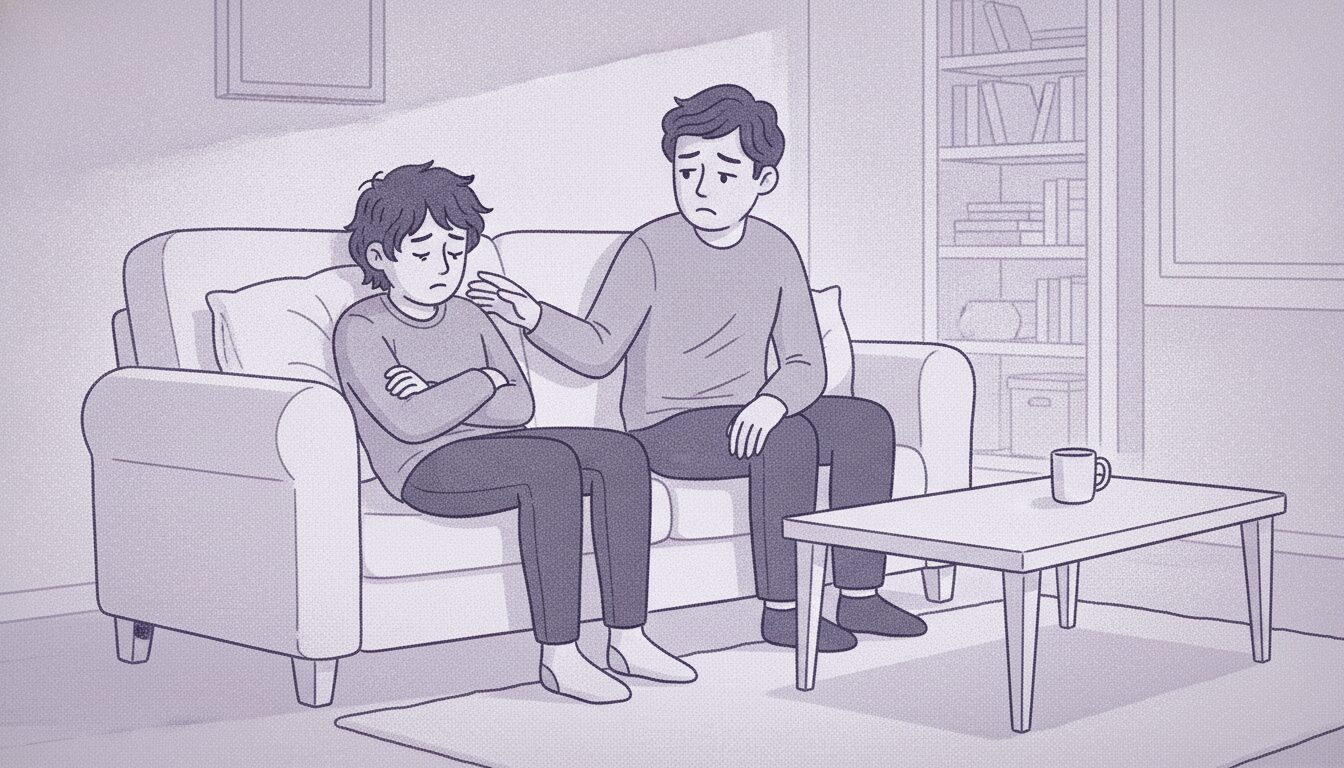
Many teens in IOP have trauma histories, whether or not that’s the presenting concern. A trauma-informed program understands that behavior that looks like defiance, withdrawal, or “attitude” is often a trauma response, and it structures the environment to avoid re-traumatizing kids.
Ask:
Is your program trauma-informed?
What does that mean in practice here?
Do your clinicians have specific trauma training?
Be wary of programs that use the phrase as a buzzword without being able to explain what they actually do differently.
3. What the program specializes in
This is the question that most determines fit. Adolescent mental health programs are not interchangeable:
- General mental health IOPs treat depression, anxiety, mood instability, trauma response, and emotion regulation. This covers the majority of teens who need IOP.
- Eating disorder programs require specialized medical monitoring, dietitian involvement, and meal support that a general mental health IOP does not provide. If your teen has an eating disorder, you need a program built for that.
- Primary substance use programs are different again, with addiction-specific treatment, drug testing, and relapse-prevention frameworks. Many general mental health IOPs treat secondary substance use (substance use that’s tangled up with depression or trauma) but are not primary addiction programs.
- Autism-informed programs understand that an autistic teen in crisis needs a neurodiversity-affirming approach, not a standard talk-therapy group that assumes neurotypical social processing.
Ask:
What is your program primarily designed to treat?
If my teen’s main issue is [X], is this the right program, or should I look elsewhere?
The best programs will tell you honestly when you’d be better served somewhere else.
4. School coordination policies
If your teen will be attending IOP during the school year, that could mean missed class time and academic coordination. Good programs schedule around school (afternoon sessions after the school day) and actively coordinate with your teen’s school.
Ask:
What are your hours?
Do you coordinate with schools on attendance and academics?
Do you handle the paperwork for excused absences?
Most Tennessee school districts will work with IOP teams, but the program should be handling that coordination, not leaving it to you.
5. Family-therapy frequency
The research is clear that family involvement significantly improves outcomes for teens in higher levels of care. A program that treats your teen in isolation and never involves you is missing a core ingredient.
Ask:
How often is family therapy included?
Are parents coached on how to support a teen at home during and after the program?
A good answer involves the family, not a single intake meeting and then silence.
6. How step-down to weekly outpatient works
IOP is a transitional level of care, not a permanent placement. The goal is to stabilize your teen and step them down to weekly outpatient therapy and medication management. A program that doesn’t have a clear step-down plan is one your teen could get stuck in, or worse, get discharged from with no continuity.
Ask:
What happens when my teen completes IOP?
Do you provide ongoing outpatient care, or do we have to find a new provider?
Is there an aftercare group?
The best answer is a program that can keep your teen with the same practice as they step down, so the treatment relationship and the medication management continue without interruption.
The “near me” reality: proximity vs. specialized fit
Here’s the tension in a “near me” search. The closest IOP is convenient, but adolescent IOP is specialized care, and specialized care isn’t available in every town.
Athena Care operates seven locations across Tennessee, in Nashville, Franklin, Murfreesboro, Hendersonville, Clarksville, Memphis, and Knoxville, providing outpatient therapy, psychiatry, and testing for kids, teens, and adults. But our specialized adolescent IOP programming is concentrated at specific sites—we currently offer in-person, adolescent IOP programming in Nashville and Clarksville and also virtually statewide.
For a program your teen attends a few afternoons a week for several weeks, the drive to another city is often worth it to get the right specialized care. Or your family can consider enrolling your teen in virtual IOP, which we offer statewide in Tennessee.
When you call, our care coordinator can tell match you with the right fit for your teen’s specific needs, and can determine whether the closest site offers what your teen needs or whether another location or virtual sessions would be better.
How Athena Care’s adolescent IOP works
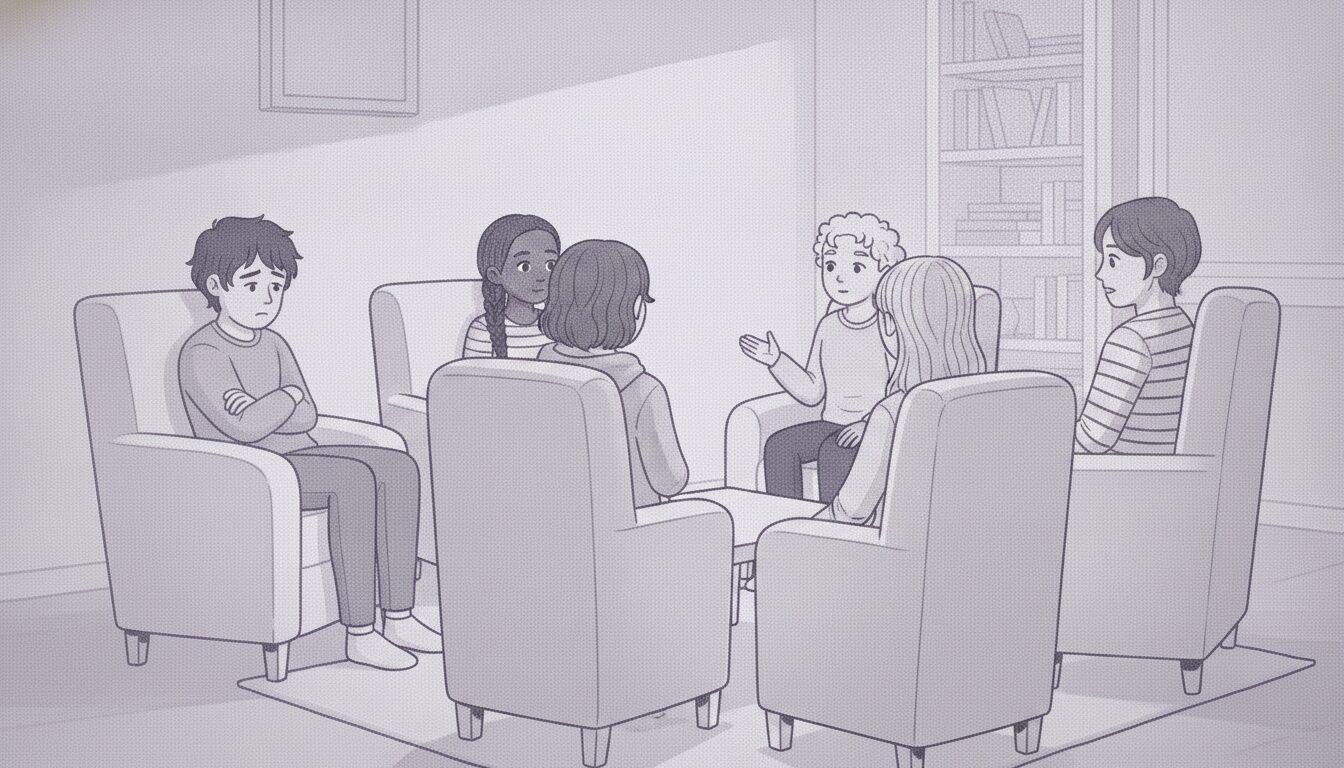
Our adolescent IOP provides 3 hours of programming per day, 3 days per week (typically afternoons, 3:30 to 6:30 PM, so your teen stays in school), in a format that includes:
- Group therapy focused on emotion regulation, distress tolerance, and coping skills
- Specialized break-out groups for specific concerns
- Experiential groups (skills-building through doing, not just talking)
- Prioritized access to individual psychotherapy and medication management
- Coordinated care with your teen’s outside providers and school
We treat depression, anxiety, mood instability, self-esteem struggles, trauma response, emotion-regulation difficulties, and secondary substance use (substance use connected to a primary mental health concern). Our programs work best for teens whose primary issues relate to mood or other mental health concerns. If your teen’s primary issue is an eating disorder or primary addiction, we’ll help you find the right specialized program.
One thing that distinguishes us from teen-only residential programs: because we’re a full psychiatric practice, our interventional psychiatry options (like TMS or Spravato) are available when clinically appropriate, and the same practice provides the step-down to weekly outpatient care, so your teen doesn’t have to start over with a new provider when they complete IOP. For our broader children’s and teen services, see our counseling and therapy for children page, and for the full IOP and PHP picture, our PHP and IOP services page.
When your teen needs more (or less) than IOP
IOP is one level on a ladder of care:
- If weekly therapy is working, your teen may not need IOP at all.
- If your teen needs daily, more intensive structure but not overnight care, a partial hospitalization program (PHP), 5 hours a day, 5 days a week, may be the right level. Teens often step down from PHP to IOP.
If your teen is in crisis or unsafe, they may need inpatient care, not IOP. Call 988 or the Tennessee Statewide Crisis Line at 855-CRISIS-1 (855-274-7471), which can dispatch a mobile crisis team anywhere in Tennessee, free regardless of insurance.
Frequently asked questions
What’s the difference between IOP and PHP for teens? IOP is 3 hours per day, 3 days per week, designed so your teen stays in school. PHP is more intensive, about 5 hours per day, 5 days per week. Teens often step down from PHP to IOP, then to weekly outpatient care.
Will my teen miss school for IOP? During the school year, adolescent IOP is typically scheduled in the afternoon (around 3:30 to 6:30 PM) specifically so teens can attend school during the day and IOP afterward. Some class time may still be affected, and good programs coordinate with the school.
How long does adolescent IOP last? Most teens complete IOP in a few weeks to a couple of months, depending on clinical progress. It’s a transitional level of care, not a permanent placement.
Does my teen have to have a specific diagnosis? No. IOP treats a range of concerns including depression, anxiety, mood instability, trauma response, and emotion regulation. A clinical assessment determines whether IOP is the right level of care.
What if my teen has an eating disorder or substance use issue? Athena Care’s IOP treats secondary substance use (connected to a primary mental health concern) but is not a primary addiction or an eating disorder program. If that’s your teen’s main issue, we’ll help you find a specialized program built for it.
Is adolescent IOP covered by insurance? Most major commercial insurers (BCBST, Cigna, Aetna, UnitedHealthcare, Humana) and Tricare cover adolescent IOP with prior authorization. Our intake team verifies your specific benefits.
We’re in Franklin/Murfreesboro. Is there an IOP near us, or do we have to drive to Nashville? Athena Care has locations across Middle Tennessee, but current adolescent IOP are in Nashville and Clarksville and virtually over telehealth statewide. Many families commute for our specialized teen care or decide to use our virtual IOP option. Our care coordinator can tell you which option fits your teen’s needs.
Can my teen continue with the same providers after IOP? Yes, depending on provider availability. Because Athena Care is a full psychiatric practice, your teen can step down from IOP to weekly outpatient therapy and medication management with our providers, maintaining continuity of care.
Start with a free assessment call
The best way to figure out whether IOP is right for your teen, and which program fits, is a conversation. Our care coordinator can talk through what your teen is dealing with, help you understand the level of care that fits, and answer the parent’s-guide questions above honestly for our own program.
Call our dedicated PHP/IOP intake line at (615) 437-6412, or our main care coordinator at 877-641-1155, Monday through Friday, 7am to 6pm. You can also email our PHP/IOP team at [email protected].
There’s no cost to make the call and talk through whether IOP is the right next step. If we’re not the right fit for your teen, we’ll help you figure out who is.
Contact us today

Juan Trevino, LCSW, IOP/PHP Director at Athena Care
Therapist
Juan Trevino is a Licensed Clinical Social Worker and a seasoned leader in therapeutic interventions and clinical program management.

Meg Stein, CFP
Editor
Meg is a certified mindfulness instructor and works at Alive and Aware Practice in Durham, NC. She has over ten years of experience as a content creator and marketing consultant, working in mental healthcare and social justice.